


This one’s real, y’all. If you’re looking for cozy comfort about the Christian life, you’re not going to get it. Instead, you’re going to get my honest assessment of what life has been like since I converted to Christianity two decades ago.
Many of you know my atheist background. I was the perfect atheist experiment. Raised in secular Canada by lapsed Catholic parents, I had zero exposure to churches, Scripture, or even basic knowledge of who Jesus was. Science was my religion, my entire reason for being. I devoured Carl Sagan, lived for Star Trek and Star Wars, and pursued astrophysics with evangelical zeal. According to pop atheism, I should’ve stayed an atheist forever.
Instead, in 1999, my work on Big Bang-related research (coupled with an unexpected moral and philosophical nudge from The Count of Monte Cristo) convinced me God is real. There was a genuine sense of joy attending that realization. Belief in a Creator lifted a weight I hadn’t fully realized I carried, but I also accepted no real burden with it—I was just someone who believed in God. Seven years later, after reading Gerald Schroeder’s The Science of God, Lee Strobel’s The Case for Christ, and studying Scripture, I became a Christian—much like C.S. Lewis described himself, “the most reluctant convert in all England.” Unlike so many conversion stories I’ve read, I didn’t find myself jumping for joy. I knew this meant committing to an eternal change, and I felt the weight of it settle on me immediately. Here’s what no one told me about what happens after.
1. Life got infinitely more complicated
They say the devil leaves his own alone. As an atheist, life wasn’t necessarily happier, it was just simpler. I could let things slide and ignore that deep, nagging sense that I shouldn’t. Sure, I might’ve felt bad after being rude to someone, but without immediate consequences or eternal accountability, it didn’t seem worth the humility or effort to change.
Becoming Christian ended that illusion. Now every aspect of my life falls under the light of Scripture. I examine my words, attitudes, and choices with new scrutiny. I bite my tongue when snark or unnecessarily harsh “truth” would have been my default. I consider how my actions ripple into the lives around me—and into eternity. Picturing the moment I stand face-to-face with my Savior, accounting for it all… few things make me feel the weight more.
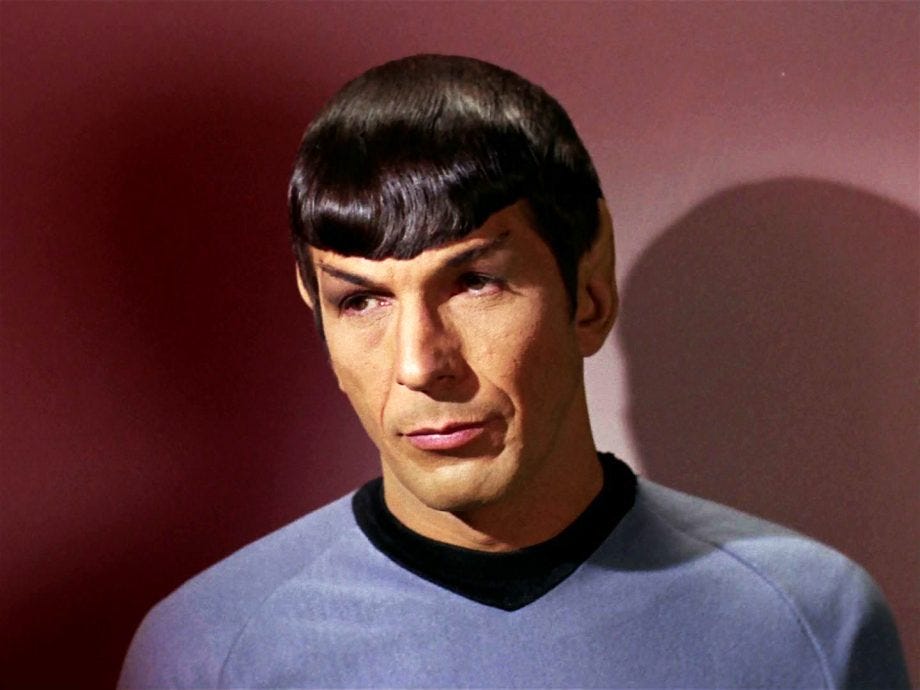
In the moment I was baptized, I felt a great unease settle on me. Maybe it's coincidence, maybe not, but shortly after, my life turned upside down, and it hasn’t righted itself since. Multiple rounds of cancer. The stillbirth of our daughter Ellinor. My husband’s near-fatal bout with meningitis and encephalitis. Recurring health battles, job stresses, anxiety, and depression. Being Christian has given me the long view through all this, but it hasn't made it easier. To anyone who claims people convert to Christianity to go through life on the easy setting, I raise a Spock-like eyebrow. Christianity didn’t simplify my existence at all.
2. Conversion never really ends
I converted in 2006, but that was merely the beginning of a decades-long—probably lifelong—process. When I first read C.S. Lewis’s comment that faith is a commitment that starts all over again each day, I heaved a weary sigh and thought, “Really??” But it’s true. Every single day I recommit to submitting my will to God’s. Every day I learn something new about Him, about Jesus, about the Holy Spirit, and about who I am in light of them. Every day I confront another piece of the old, fleshly me that needs to die. It’s frustrating, humbling work.
Looking back at how far I’ve come since those early days, I sometimes wonder: Had I known the full cost upfront, would I have hesitated? I hope not. But I know now that signing my name, as it were, in the baptismal water was not the finish line.
3. I have to keep killing my old gods
Idols die hard, even (especially) for a former atheist who thought she had none. Politics was one. I was deeply invested in the American political scene until I realized it had become a source of perpetual aggravation and false hope. Releasing it to God’s sovereignty brought peace, even as the world seems to spin toward chaos.
Other idols fell more slowly: trust in institutions—forms of government, academia, media, entertainment. Every time one cracks or corrupts, the old me wants to wallow in sorrow and despair. But they were always temporary, human-made things destined to fade.
Comfort was another quiet god. I hate conflict, noise, mess, boredom, and disrupted routines. But having a family and being part of any community guarantee all of them. Letting go of my craving for control and predictability has been a daily crucifixion of self.
4. I have to hold myself to an annoyingly high standard
Oh, the freedom of atheist snark. I could dismiss people I disagreed with without a second thought. No longer. Now I represent not just myself, but Christ and His church. That’s a heavy responsibility.
I’m called to show genuine, Christ-like love—even to those who test every ounce of patience. Online discourse makes this brutally clear, as ill-intentioned trolls and well-intentioned arguers alike can drive a person to the edge. But snarking and sniping moves no hearts or minds towards Christ, least of all mine.
My role model here is apologist Frank Turek. Watch his campus Q&As on YouTube (I’m addicted to them). The man fields hostile questions with the patience of a saint, admirably keeping the focus on biblical truth rather than his ego. When I manage to set my pride aside, it creates space for Jesus to enter the conversation. The good news? The more I practice this, the more natural it feels.
5. I have to trust God when I really, really don’t want to
Ever since I was a kid, I’ve operated with a fierce “make it happen” mentality. I learned from an early age that if I wanted something, all I had to do was plan and execute. Leaving home for university shattered that. I realized how much my parents had buffered life, and on my own, a lot of that control was revealed to be an illusion.
Has that realization stopped me? Let me put it this way. If it were up to me, I’d sit down with God and demand the five-year plan complete with dates, milestones, and contingencies. Better yet, I’d draft it myself. But that’s not how He works. In fact, He seems to delight in the opposite. Scripture is full of His last-moment provision: the Jordan River parting only after the priests enter the water; Abraham raising the knife right before the ram appears; the disciples’ terror on the sea before “Peace, be still.”
I share the planet with eight billion others and navigate a spiritual reality I’m only dimly aware of—it’s absurd to think I have control over much of anything. Trusting the unseen orchestration—twists and turns in life I could never foresee—goes against every fiber of my controlling nature. Yet it’s better this way. My limited vision would have steered me wrong countless times. God’s hasn’t.
The weight was worth it
Looking back, the “perfect atheist experiment” failed spectacularly. Science, which was once my religion, led me to the Creator. The relief of theism gave way to the heavier, richer reality of following Christ. It has been exhilarating and mind-expanding, but also terrifying and heartbreaking—sometimes all of it at once.
I still miss the simplicity of my old life sometimes, but I wouldn’t return to it. The weight I felt at baptism was real, but so is the grace that sustains me through it. If any of you are considering becoming Christian, I’m sorry to tell you conversion isn’t always a tidy before-and-after story. For me, it’s been an ongoing surrender, a daily dying and rising. And by God’s mercy, I’m still in it—still learning, still recommitting, still trusting the One who upended my world for the better.

If you enjoyed the article, I’d really appreciate it if you hit the like button below. It helps me see which topics resonate with readers and it boosts my writing. There’s also a share button if you’d like to send this to a friend who might enjoy the science-and-faith conversation.
Please also feel free to comment or ask questions below. If you’re new here, I encourage you to check out my FAQ first.
If you’re a free subscriber and would like to support my work, please consider a paid subscription. Researching and writing these pieces takes time and effort, but I’m committed to keeping my best work—and the vast majority of my content—free for everyone. The generosity of my paid subscribers makes that possible.
If you haven’t written about it before, I’d love to read about your experience with The Count of Monte Cristo.
Excellent piece; thank you for sharing your experience so openly. Now I'm confronted with a quandary: do I share this with some atheists I know or keep it from them? 😉 As I was reading it I was a little worried for a while, but then you brought in grace at the end. Thank God for grace! We all need it, every day.