


We’ve all encountered that person who, when he or she finds out you’re a Christian interested in science, launches into one of a few common myths. These are deployed like faith-seeking missiles zeroing in on your belief in God or your position that science and Christianity aren’t really at odds. Their only real power, though, is if you never question them. Let’s take a closer look at two common myths about science and Christianity and why they don’t hold up.
Myth #1: Science has disproved God
No, it hasn’t. Not even close. But this myth persists for two reasons:
Its proponents are dazzled by the power of science.
Whenever I think about the power of science, I’m reminded of the time Star Wars director George Lucas said, “The biggest trap people fall into … they go too far.”1 He was talking about big, grand spectacle type movies, but it’s a general principle: people have a tendency to go too far with anything powerful, including science. Yes, science is powerful in describing all kinds of natural things, from the progression of the universe since the big bang to the weird behavior of quantum systems. But it can only describe what happens in the universe after it’s created. As much as scientists would love to extend the scientific method to cover everything, from how to get girls to like you to what lies beyond the universe, it’s just not possible. Whatever caused the universe is beyond the universe—untouchable by science. So, no. Science has not disproved God.
Some of them really, really want to avoid the mess of dealing with something beyond the universe.
Most physicists would prefer a tidy, self-contained universe that is its own explanation, all wrapped up with a neat theory of everything.2 Dealing with a universe with a beginning, with a cause that lies beyond the reach of science, is like having an itch in that part of your back you can never quite reach. Even worse, a universe with a beginning leaves the door wide open to God—and some atheists would prefer that door never existed. But since it does, desperation at times leads extremely smart people to say monumentally silly things, like when Stephen Hawking declared in his book, The Grand Design, that “because there is a law like gravity, the universe can and will create itself from nothing.”
![Picard Facepalm 4K wallpaper [3840x2160] : r/TNG](https://substackcdn.com/image/fetch/$s_!--5G!,f_auto,q_auto:good,fl_progressive:steep/https%3A%2F%2Fsubstack-post-media.s3.amazonaws.com%2Fpublic%2Fimages%2F3e5926cf-8d76-452b-bcf1-7becf6295ae4_3840x2160.png "Picard Facepalm 4K wallpaper [3840x2160] : r/TNG")
That’s like saying, because there are laws like Newton’s, jet engines can and will create themselves from nothing. Stephen, buddy, you should’ve thought that one through.
As mathematician John Lennox put it:
…Hawking’s claim is misguided. He asks us to choose between God and the laws of physics, as if they were necessarily in mutual conflict.
But contrary to what Hawking claims, physical laws can never provide a complete explanation of the universe. Laws themselves do not create anything, they are merely a description of what happens under certain conditions.
What Hawking appears to have done is to confuse law with agency. His call on us to choose between God and physics is a bit like someone demanding that we choose between aeronautical engineer Sir Frank Whittle and the laws of physics to explain the jet engine.
Myth #2: The Church persecuted scientists
Whenever I talk to atheists on social media about how Christianity is not actually hostile to science, they usually bring up the same three people as a counterargument: Galileo, Bruno, and Hypatia. But do these cases really show that Christianity has historically feared and hated scientists? Let’s take them one by one, starting with the easiest.
Giordano Bruno (1548 - 1600 AD)
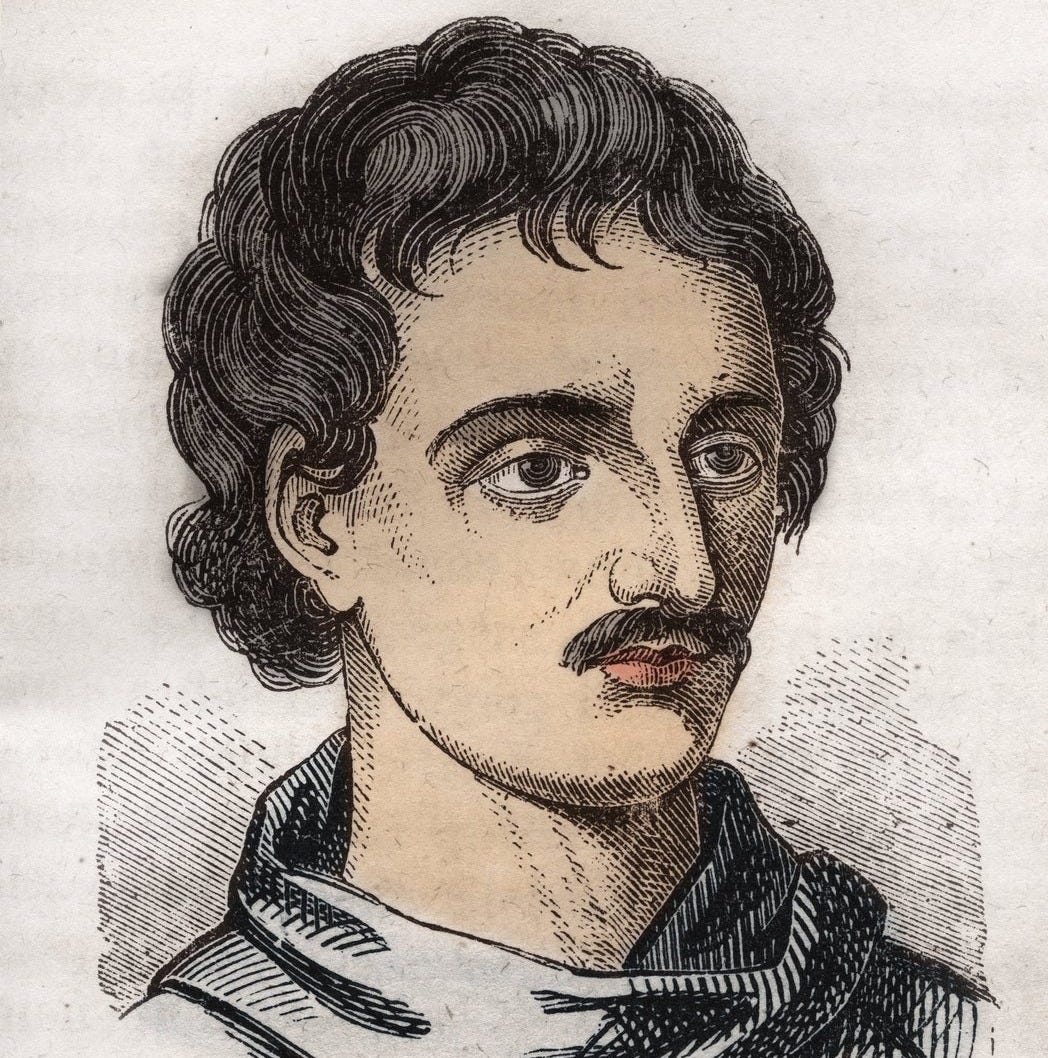
An atheist friend of mime in grad school named his son after Giordano Bruno. This 16th-century Italian Dominican friar and philosopher is famous in atheist circles for having been centuries ahead of his time, proposing an infinite universe, stars as distant suns, and extra-solar planets with living beings on them. As the story goes, he stood tall even as the Church tried to force him to recant these scientific ideas, ultimately being burned at the stake in the name of science. If that were really how it went, then naming your child after such a person might carry real meaning. But this version of history leaves out important details.
The truth is, in Christian terms, Bruno was a categorical weirdo. He took vows to become an ordained priest, a position that carried the responsibility of teaching official Church doctrine. It’s not that the Church was overly rigid and hostile to new ideas—it had incorporated much of Aristotelian philosophy when it was rediscovered in the medieval era and largely let Copernicus’ book slide—but it wouldn’t tolerate the promotion of blasphemous or heretical ideas. And Bruno promoted some really blasphemous and heretical ideas. Just how bad were they? For starters, he denied the divinity of Christ—one of the fundamental pillars of Christianity. He also denied Mary’s virginity, taught a pantheistic view that God is identical with the universe and that souls transmigrate after death (entering another human, an animal, or a body on a different world), and that Satan would be saved.
The irony for those who hold him as some sort of scientific saint martyred for the cause? He also believed in magic, in a form that’s very similar to the Force in Star Wars, but includes spirits. His scientific views overlapped with these heresies, but they were not the primary reason he was tried and killed.
Hypatia (c. 355 - 415 AD)

The truth about Hypatia is uncomfortable, but not for the reasons atheists think. She was a well-known mathematician, astronomer, and philosopher who lived in Alexandria, Egypt in the 4th–5th centuries AD. In the year 415 she was dragged into a church and brutally killed by a mob of Christians. Contemporary atheists hold that it was for the twin crimes of being a female scientist and having science-based heretical views. But the truth is more mundane, if still unsettling.
The broader context is that Alexandria was notoriously violent and factional at the time. Cyril, the ambitious Christian patriarch of Alexandria, was aggressively trying to expand the Church’s power against both the imperial civil authorities and the pagan institutions that still remained. According to the Christian historian Socrates Scholasticus, Hypatia was a close adviser to the Roman prefect Orestes, who was locked in a feud with Cyril. Rumors spread that Hypatia was preventing Orestes from reconciling with Cyril, and, well… cue the murderous mob.
Socrates framed this purely in terms of political jealousy, not anything to do with science. It’s worth noting he thought this episode brought great disgrace on Cyril and the Alexandrian church.
Galileo Galilei (1564 - 1642 AD)
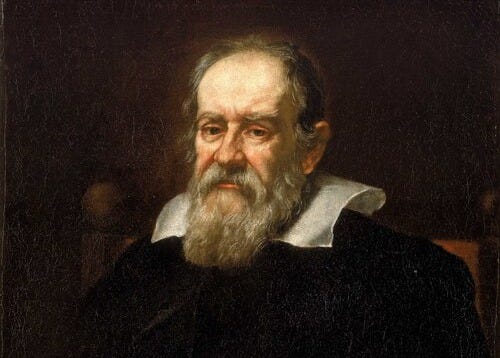
We all know about Galileo Galilei. He was the early-17th-century Italian scientist who was brought before the Inquisition and found “vehemently suspect of heresy” for holding and teaching that the Earth goes around the Sun. But is this case as simple as Christianity vs. science?
Consider these words by Cardinal Robert Bellarmine, a central figure in the 1616 proceedings:
While experience tells us plainly that the earth is standing still, if there were a real proof that the sun is in the center of the universe … and that the sun does not go round the earth but the earth round the sun, then we should have to proceed with great circumspection in explaining passages of scripture which appear to teach the contrary, and rather admit that we did not understand them than declare an opinion to be false which is proved to be true. But this is not a thing to be done in haste, and as for myself, I shall not believe that there are such proofs until they are shown to me.
Bellarmine’s approach is a model of sensible procedure. He assumed there’s no inherent conflict between science and Scripture, because God authored both. He believed any apparent conflict showing we might be wrong about how we’ve interpreted Scripture should be approached carefully, and only with conclusive scientific proof in hand. If you strip away the religious element and frame Bellarmine’s comment in terms of modern strongly-held beliefs (maybe climate change for some, the binary nature of sex and gender for others) most people would say careful consideration of scientific proof is the only way they’d change their minds.
Unfortunately, Galileo did not provide conclusive scientific proof for his view that the Earth goes around the Sun, but a case the Church rightfully at the time saw as flawed and not sufficient for changing centuries of Church doctrine. (Bellarmine died in 1621; the final trial was in 1633.) If Galileo had provided the evidence we have now, it’s likely Bellarmine would’ve been convinced.
The Church wasn’t telling Galileo that he couldn’t teach heliocentrism, but rather that he couldn’t teach it as fact. Discussing it as a hypothesis was still allowed. If he hadn’t been so stubborn about presenting it as established truth, he could’ve continued and almost certainly avoided the worst of the prosecution.
History treats the Church unfairly about Galileo, because hindsight is 20/20. We have the proof now, and we don’t have any problem reconciling Scripture with the Sun at the center of the Solar System. But it wasn’t so in Galileo’s time. There are lessons to be learned from this legendary dust-up between Galileo and the Church, but “Christianity hates science” isn’t one of them.
Conclusion
These kinds of myths make for pithy, science-flavored talking-points against Christianity, but they’re mostly lies spawned from kernels of truth. In general, it’s not a good idea to take what an opponent of your faith says at face value. All you have to do to counter stuff like this is investigate the truth. I have yet to find a single case where a myth like these has held up to scrutiny. Sometimes it’s nuanced, sometimes it’s not. But rest assured, science and Christianity are not at odds.

If you enjoyed the article, I’d really appreciate it if you hit the like button below. It helps me see which topics resonate with readers and it boosts my writing. There’s also a share button if you’d like to send this to a friend who might enjoy the science-and-faith conversation.
Please also feel free to comment or ask questions below. If you’re new here, I encourage you to check out my FAQ first.
If you’re a free subscriber and would like to support my work, please consider a paid subscription. Researching and writing these pieces takes time and effort, but I’m committed to keeping my content free for everyone. The generosity of my paid subscribers makes that possible.
Lucas says this to Obi-Wan Kenobi actor, Ewan McGregor, in the 1999 documentary The Beginning: Making Star Wars: Episode I. Lucas admits elsewhere in the documentary that he himself fell into this trap.
They may think they prefer a self-contained universe, but if this were true and someone actually figured out a theory of everything, physicists would be depressed. Much like Alexander the Great contemplating his empire, they would look on all that was explained and lament that there were no more theories to conquer.
There is a course on Jordan’s Peterson academy on the philosophy of science. In it it describes science as pertaining to our universe only and refers to the 4 laws of nature and matter and energy of the universe (obviously a very brief description) So existence and science were created by God and there can be no conflict between either science and religion.
This is described in my https://jrcsmc.substack.com/p/science article on what science is.
As far as Galileo is concerned, the so called Galileo controversy was political and had little to do with religion or science. It tool place in the middle of the 30 Years war which had Catholics on both sides. Galileo portrayed the Pope as a fool in his treatise. Pope Urban had ties to France who was on one side and the Hapsburgs were on the other side.
And of course just as heroin addicts do not disprove the efficacy of medication in general, or depictions of sadistic violence disprove the value of visual art; that some people take evil actions in the name of good does not show the non-existence of good. Indeed, some Christians take those three examples (Hypatia was new to me, but it fits the pattern) to argue that these things reflect badly on government and its coercive powers, whatever the ideology that is used as an excuse.