



I got into apologetics as a graduate student twenty years ago, shortly after I’d turned my life over to Jesus Christ. Before that, pursuing a career in science was my entire raison d’être. But an encounter with a student one evening changed all that. After an astronomy tutorial session, a student approached me and sheepishly asked if it was okay to believe in God and science at the same time. I told her yes, of course, and that I was living proof. Visibly relieved, she described how one of her professors told her she couldn’t have both and had to choose. I felt a sudden surge of anger. I couldn’t believe a professor would use his position of authority to try to strip a young, vulnerable person of her faith. In that moment, I launched into a mission to save other Christians from attacks on their beliefs.
I’ve spent the last two decades helping Christians hold onto their beliefs in spite of “scientific” challenges purporting to “destroy” faith. I’ve written hundreds of articles and given countless talks on how to respond to these challenges, which are usually in the form of not-particularly-good science-flavored arguments against core beliefs of Christianity (especially the existence of God) or just denying the evidence.
Most believers—myself included—are used to being on the defensive. We spend our energy building and defending arguments for God. If you’re reading this, you’ve likely felt the pressure to explain or justify your belief in light of this or that objection many times. Scripture tells us to be ready to give a reason for the hope that is in us (1 Peter 3:15), and that’s important. But after years of operating this way, I began to notice something odd: the other side is rarely called upon to defend their beliefs. A few years ago, while preparing for a speaking event, I started wondering what would happen if Christians flipped the script and required challengers to examine and defend their own worldviews. I’ve since become convinced that a robust approach includes both giving reasons to believe and inviting others to articulate their own worldview and test whether they live consistently with it.
When I press atheists on this point they usually insist there is no atheist worldview. I hear the claim so consistently that it must be coming from a common source. But it’s not true. Everyone has a worldview. It’s simply a comprehensive idea of the world—a broad personal perspective on life and the universe that includes philosophy, attitudes, values, morality, and ethics. Whether or not someone has ever examined it, that perspective shapes how they interpret evidence, experience, and claims about reality.
Worldviews are never neutral. In the United States, even most atheist outlooks are still colored by the Christian values that permeate the culture, whether they’re aware of it or not. At the same time, an atheistic worldview rests heavily on the non-existence of God. If no God created the universe, if humans are not made in His image, if there is no divine source of morality, if there is no salvation and no life beyond death—how could that fail to shape a person’s entire picture of reality? Yes, there is an atheist worldview. It may come in variations, but the difference between a God-centered view and one built on God’s absence is real and consequential.
My story
My own journey to Christianity began with examining the atheistic worldview I had inherited. I was raised atheist in secular Canada by lapsed Catholic parents. For the first twenty-six years of my life I simply assumed certain things that were important to me: the existence of individual rights, the sanctity of human life, and the importance of rule of law. When I finally tried to trace those beliefs back to their foundation, I experienced a crisis. I couldn’t reason my way from the most foundational thing I could think of—fundamental forces and particles in the first moments after the Big Bang—all the way to the present-day conviction that every human life has intrinsic value. There was no rational, natural progression from one to the other—it was as though some unexplained leap occurred somewhere in the middle, and suddenly human life, cobbled together from quarks and electrons and the forces of nature, possessed intrinsic value.
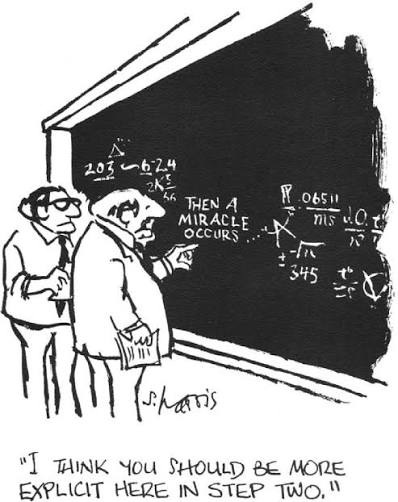
When I turned to atheist intellectuals for answers, I was sorely disappointed. Their arguments offered little to no help. They usually asserted that rights just exist, or make some utilitarian argument, or effectively stated that harming someone unprovoked is always wrong just “because.” I was shocked by how meager the philosophical underpinnings of my values were. Here is a recent example of this lack of reasoning toward objective morality.
Two years later, while working for the first time in astrophysics research, I spontaneously became a theist. I suddenly realized God’s existence solved two major problems at once: why the universe appears so exquisitely designed and where objective morality comes from. As I later moved toward becoming Christian I discovered that the biblical worldview was comprehensive and coherent. It answered the problems that had troubled me most—particularly the source of human dignity.
The defensive habit
For years I, like many believers, focused almost exclusively on defending the faith. Cosmological arguments, the fine-tuning of the universe’s parameters, the teleological and ontological arguments, the historical case for the Resurrection, the reality of morality and justice, near-death experiences, personal testimonies, the cumulative weight of evidence—these became familiar territory. The best that critics could muster were maybes—maybe a multiverse explains fine-tuning, maybe the appearance of design is all in our heads, maybe morality is a human construct. It all hangs on mere possibilities, no matter how remote, of alternate explanations. The Kalam cosmological argument is one of my favorite examples of this. It goes like this: Premise 1: Whatever begins to exist has a cause; Premise 2: The universe began to exist; Premise 3: Therefore the universe has a cause. Combined with the argument for a personal cause, it becomes a powerful defense of the existence of God. The logic of the argument is airtight, so critics resort to attacking the first two premises. But here’s the kicker. Few people live as if those premises are false. Ask someone who disputes the first premise to prove where his lunch came from and the special pleading begins almost immediately. “I made my lunch! People make lunches all the time!” But how do I know that for sure? I didn’t see you make it, and if entire universes can pop into existence uncaused, then why can’t sandwiches also?
I’m not saying we shouldn’t defend our faith—1 Peter 3:15 makes it part of our mandate, and these arguments are both individually and collectively powerful. But the imbalance is striking. Have you ever noticed how believers are expected to justify every claim while non-believers often remain unchallenged on their foundational assumptions? It’s time to change that.
Flipping the script
The remedy is straightforward: Require challengers to examine and defend their own worldview. Why? Because it puts skin in the game. It costs a challenger nothing to press you endlessly about your beliefs while offering nothing about their beliefs. Next time, tell your challenger you agree to answer his questions, but only if he’ll answer yours. It also forces clarity. Turning the tables quickly reveals whether a worldview holds together or collapses under scrutiny.
I usually begin with simple questions. What is the basis of your worldview? Where did it come from? What assumptions does it rest on? Does it explain the things that need explaining? Does it hold together without any contradictions? If you do this, you’ll discover that most people have never been asked these questions in a serious way.
What I typically receive from naturalistic challengers is a clumsy patchwork of cultural inheritance (much of it still Christian), educational and media influences, and personal preferences. It’s rarely intentional and even less often coherent. And when pressed, it struggles to account for the very realities its adherents care most about.
Here’s a concrete example. Without some kind of cosmic Law-giver, there’s no good reason to assume evolution would wire human brains to perceive reality accurately. Natural selection favors traits that promote survival and reproduction, not necessarily traits that track the truth. A striking illustration of this problem is the fact that the vast majority of human beings across history and cultures have believed in God or some higher power—despite the common atheist claim that no evidence for such a being exists. We also have evidence that strong belief in God or a higher power is linked to higher reproductive rates. So if nature routinely selects for belief in things that (according to the naturalist) do not exist, and if that belief is itself tied to reproductive success, then on what basis can we trust our senses, our perceptions, or our capacity to reason about anything at all?
A mere Christian alternative
By contrast, a mere Christian worldview centers on a transcendent, eternal, all-powerful, and loving God who created a lawful universe, intentional life, and human beings made in His image, who confronted the catastrophe of the Fall and provided redemption through Jesus Christ. This framework is not an abstract philosophy, but a view concretely tied to the real world. It explains why the universe is finely tuned for life and why it’s intelligible to rational minds—because a rational Mind spoke it into existence and supports it every moment. It accounts for consciousness and the deep human longing for meaning— because we are more than mere matter. It grounds morality and justice—because every person bears the image of a just and personal God who wrote His moral law on our hearts. It addresses the problem of evil without denying its reality, and it offers genuine comfort and motivation for living differently than the world. It’s coherent—no part of the Christian worldview seriously contradicts any other part—and it has historically produced lives of remarkable transformation.
The challenge itself
If a challenger agrees to examine and defend his own worldview, I invite him to lay out his core beliefs, the assumptions underneath them, and the grounds for those assumptions. Then I ask how his view organically and coherently explains the full spectrum of reality: a universe with a beginning in time, the fine-tuning of the cosmos, the presence of design and order, existence itself, life, consciousness, rationality, near-death and out-of-body experiences, morality and justice, and the person and claims of Jesus Christ. A hodgepodge of partial or ad-hoc answers is not enough. A serious worldview must cohesively speak to all of it.
I also ask two further questions: Does this view offer any real comfort or consolation to the average person? And how does it motivate most people to live better?
I want to clarify something here. This should not be an exercise in “gotcha” or an attempt to trap or humiliate someone. Rather, it’s an opportunity to encourage someone to fully think through their view of existence. In practice the exchange might sound like this: “Here’s what my worldview explains (list everything). Help me understand how your worldview accounts for all of these things. I’m not trying to pin you down—I genuinely want to see how the pieces fit together.” Tone is important. If the questions are rooted in loving curiosity, it can open doors that a hostile approach would otherwise close.
What a coherent worldview can produce
History gives us vivid illustrations of the power of the Christian worldview to transform people. John Newton, a former slave trader, rediscovered the Christian faith he’d been raised with, became a pastor, and wrote the iconic hymn, “Amazing Grace,” as a direct description of his own journey from wretchedness to redemption. William Wilberforce grew up wealthy and idle, entered politics, and underwent a profound spiritual transformation. He devoted the rest of his life to abolishing the slave trade and advancing a host of humanitarian causes. Neither man was improved by the notion that the universe is a cosmic accident. They were changed by belief in a living God who is the source of human dignity, justice, and purpose.
The hidden cost of naturalistic alternatives
Naturalists sometimes reach for the multiverse to explain the origin of the universe, its apparent design, and fine-tuning while removing any need for God. As an astrophysicist I understand its theoretical appeal. Yet the multiverse remains, at present, unobservable and unfalsifiable, with far less evidence for it than for God. More importantly, whatever someone might gain by accepting the multiverse, the philosophical price it exacts is very steep. To embrace it consistently requires giving up human uniqueness, genuine choice, the reality of love, objective justice, morality, meaning, and even the reliability of reason and the senses. Even science goes out the window, because if there are ultimately no causes, the foundation of science itself is gone.
Some versions of the multiverse remove choice and replace it with alternate realities in which each possibility is realized. But no real choice means no meaningful justice. On what basis could you punish someone for an action the multiverse chose for them? Yet I have never met any proponent of the multiverse who actually lives as if any of its consequences are true. They continue to hold people accountable, to grieve losses, to love the people in their lives as irreplaceable, and to rage against gross injustices. The multiverse may appear to explain away God, but it does so by emptying the world of the very realities that make life worth living.
Encouraging someone to confront these realities and contradictions can be one of the most loving things you do for them. Some won’t care. But others—like me, when I first began questioning the beliefs I had been raised with—may be startled into reconsidering their worldview.
An invitation
It’s fine for skeptics to try to poke holes in the claims of Christianity, but that’s not enough. Every worldview must finally account for the full scope of reality without special pleading or partial answers. The first step is to examine our own worldview with the same rigor we expect from others. Then, with love, patience, and genuine curiosity, invite others to do the same. I have found that when people are asked to put skin in the game, the conversation changes. Sometimes, by God’s grace, so do the people in it.

If you enjoyed the article, I’d really appreciate it if you hit the like button below. It helps me see which topics resonate with readers and it boosts my writing. There’s also a share button if you’d like to send this to a friend who might enjoy the science-and-faith conversation.
Please also feel free to comment or ask questions below. If you’re new here, I encourage you to check out my FAQ first.
If you’re a free subscriber and would like to support my work, please consider a paid subscription. Researching and writing these pieces takes time and effort, but I’m committed to keeping my content free for everyone. The generosity of my paid subscribers makes that possible.
You’ve articulated something many believers feel but rarely name: the imbalance in the conversation. Christians are constantly asked to defend every square inch of their worldview, while challengers often get to stand on unexamined assumptions. Your call to “flip the script” isn’t about scoring points — it’s about restoring honesty. If every worldview must account for reality, then every worldview must be willing to be examined.
Your own story illustrates the power of that examination. When you traced your inherited atheism back to its foundations, you found not a coherent structure but a series of unsupported leaps — intrinsic human value emerging from impersonal particles, moral conviction without a moral source, dignity without design. That crisis wasn’t a failure of reason; it was reason doing its job. And your move toward theism — and ultimately Christianity — shows how a worldview with God at the center actually explains the things that matter most.
I appreciate how you frame the Christian worldview as both comprehensive and coherent. It accounts for the universe’s intelligibility, the reality of consciousness, the weight of morality, the ache for meaning, and the dignity of every person. It doesn’t require special pleading or philosophical gymnastics. It simply fits the world we actually live in.
Your challenge to skeptics is gracious but necessary: if you want to question Christianity, you must also be willing to question the worldview you’re standing on. That’s not combativeness; that’s integrity. And as your examples show, many naturalistic alternatives collapse under the very realities their adherents care most about.
Thank you for writing with clarity, courage, and charity. This piece doesn’t just defend the faith — it invites deeper thinking, honest self‑examination, and conversations that actually move people toward truth.
This is so helpful!
Also just wanted to say how grateful I am for your newsletter. Your substack has really helped strengthen my faith and confidence in my beliefs as a young Christian! Thank you for the work you are doing, it is so so important! God bless!