


It may sound counterintuitive, but the more unexpected Jesus is in Scripture, the more believable He becomes.
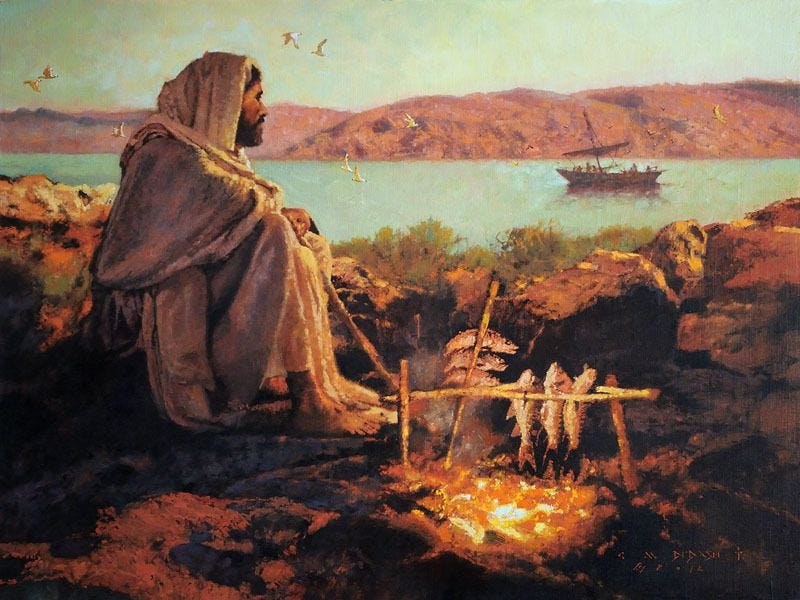
Who else in the history of world religions—especially the ancient Near Eastern ones—could have dreamed up a God like the one revealed in the Gospel of John? This book opens with the eternal Logos, the divine Word through whom all things were made, speaking the universe into existence and closes with that same figure standing on a beach at dawn, grilling fish for breakfast for His weary disciples. Then, almost as an afterthought, John drops this line: “Jesus did many other things as well. If every one of them were written down, I suppose that even the whole world would not have room for the books that would be written” (John 21:25). It just hangs there, understated and staggering—like saying, “Oh, by the way, the Guy who just fried up breakfast for His friends did far more than you could possibly imagine.”
I first started thinking deeply about this after reading through John’s Gospel and being struck by that jarring contrast between its majestic beginning and humble ending. But the thought has also been sharpened by conversations with atheists. Whenever I post about Jesus on social media, skeptics often push back: “He didn’t fulfill the Old Testament prophecies exactly as they were described!” My response is always the same: If the early Christians were simply making this up, why on earth would they include details that look like inconsistencies or loose ends? Were the Gospel writers so incompetent or careless that they couldn’t invent a tidy, perfectly matching fictional Messiah who checked every box of Jewish expectation? Or is it far more likely that the prophecies were being fulfilled in surprising, unexpected ways—and that the authors were simply being honest about what they saw and heard?
Our unexpected Messiah
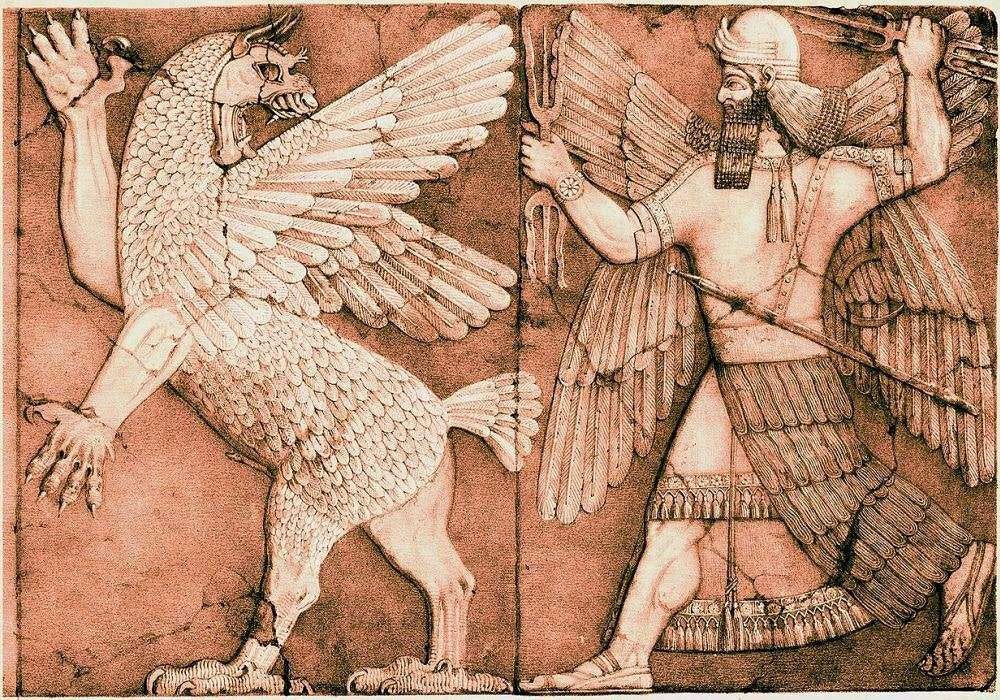
Consider the religious world of the ancient Near East, the very cultural soil in which the Israelites lived. The great Babylonian creation epic, the Enuma Elish, gives us a vivid picture of what gods looked like in that era. It is a story of warring deities, cosmic chaos, and violent conquest. The goddess Tiamat, enraged, spawns a horde of dragons, serpents, and chimeric monsters to wage war against the younger gods. Marduk rises as champion, slays Tiamat in brutal combat, splits her body to form the heavens and earth, and claims supreme power. Creation emerges from battle, blood, and domination. The gods are powerful, capricious, and often terrifying—beings who create through violence and rule through fear.
Now contrast that with the Messiah prophesied centuries later in Isaiah. Not a dragon-slaying warrior-god, but a gentle Servant: “He will not quarrel or cry out... A bruised reed he will not break, and a smoldering wick he will not snuff out” (Isaiah 42:2–3). The Suffering Servant of Isaiah 53 is “despised and rejected,” “a man of sorrows,” silent before His accusers, led like a lamb to the slaughter, bearing the sins of many—not by conquering with monsters and lightning, but by His own wounds healing us.
Jesus fulfills this prophecy in the most astonishing way. He is unimaginably powerful, yet profoundly relatable. The One who spoke the laws of nature into existence, who spun all the stars in the universe into being, who breathed life into non-life—He walked dusty Galilean roads in sandals. He ate fish and bread, breathed the same air we do, grew tired, and slept. Who would invent a God like that?
When He was accused, He stood silently before Pontius Pilate, offering no dramatic defense. He endured savage beating, mocking, torture, and the utter degradation of crucifixion. With a mere thought, He could have vaporized everyone involved. Instead, He bore the shame, absorbed the pain, and took on the punishment for sins not His own. Who would make up such a God?
What a human-made Messiah would look like
Imagine if we had invented the Messiah. He’d probably look nothing like the real Jesus.
At best, He might resemble a super-powered King David: a conquering hero who crushes the Roman occupiers, restores Israel’s glory, and rains down divine justice on the nation’s enemies—more like Marduk than the Servant of Isaiah.
At worst, He’d be the ultimate self-insert fantasy. In an episode of the TV show The Big Bang Theory the guys are facing months of brutal Arctic survival with the insufferable Sheldon Cooper. Raj, channeling his Hindu karma beliefs, declares that after enduring such horrible suffering he might be reincarnated as a well-endowed billionaire with wings.
That’s a Messiah our ridiculous hearts would design: an eight-foot-tall, impossibly handsome, ultra-wealthy alpha male riding around in a flying McLaren, zapping haters with lightning bolts, rewarding “us” (the righteous) while humiliating or destroying “them” (everyone else). He’d promise riches, power, and ravishing partners in the next life. He’d flatter our egos and never challenge us too deeply.

But the real Jesus? A poverty-stricken carpenter from backwater Nazareth, with an ordinary name and an unremarkable appearance, riding around on a donkey. He told us to examine our own faults first. To love our enemies. To turn the other cheek. To guard our thoughts. To walk a straight, narrow, often difficult path that offers no room for boasting and no way to earn our own salvation. His presence—now and for eternity—is the only reward we need. Nothing about Him flatters human pride, vanity, or base desires.
The astrophysical contrast
As an astrophysicist, the contrast in John’s Gospel hits me with special force.
Jesus is the God powerful and wise enough to create a universe so vast it defies imagination. Our observable universe stretches billions of light-years, containing hundreds of billions to trillions of galaxies—each a colossal continent of hundreds of billions of stars spread throughout the vast ocean of spacetime. Space itself teems with unseen energy that seems to come from nowhere as the universe expands.

This cosmos spans scales from subatomic quarks to living cells, to supermassive black holes, to galaxy clusters spanning millions of light-years. Massive stars explode in supernovae. Quasars blast jets hundreds of thousands of light-years long. Pulsars spin with dizzying precision. Neutron star collisions send gravitational waves rippling across the galaxy and forge heavy elements. The whole thing runs on elegant, intricate mathematics. From non-life, life arose—and from that life, conscious beings who bear the image of their Creator.
And the same One who orchestrated all of this—the deeds so numerous the world couldn’t contain the books describing them—became a flesh-and-blood man in ordinary clothes, His feet covered in the dust from which Adam’s body was formed, quietly grilling breakfast for His friends on a Galilean shore.
Who would make up a God like that?
No one. And that’s why I believe. The sheer unexpectedness, the divine humility, the perfect tension between infinite power and intimate love—it rings true in a way no human fantasy ever could. This Jesus isn’t the God we would invent. He’s far better than anything we could dream up. And He invites us to come to Him, just as we are.

If you enjoyed the article, I’d really appreciate it if you hit the like button below. It helps me see which topics resonate with readers and it boosts my writing. There’s also a share button if you’d like to send this to a friend who might enjoy the science-and-faith conversation.
If you’re a free subscriber and would like to support my work, please consider a paid subscription. Researching and writing these pieces takes time and effort, but I’m committed to keeping my best work—and the vast majority of my content—free for everyone. The generosity of my paid subscribers makes that possible.
Excellent. Thank you for putting words to these things our minds strive to encompass.
That was so good, Sarah. I enjoyed that so much. Majesty->Humility. ❤️🩹