


I get a lot of questions and responses from non-believers that show a stubborn strain of positivism is still alive and kicking—waving its “trust-the-science” flag like it’s the final word on everything.
Positivism, as a philosophical approach, insists that genuine knowledge comes only from observable, empirical facts gained through our senses and the scientific method. In short: if science can’t verify it, it isn’t knowable. Its founder was the French philosopher Auguste Comte (1798–1857). Shaken by the bloody chaos of the French Revolution, Comte dreamed of rebuilding society on a purely “rational” and “empirical” foundation—one that banished theology, metaphysics, intuition, and speculation. I can’t blame the guy for wanting stability after that nightmare. But it’s almost comically naive to think humans could (or would) sustain a society whose core principles rested solely on science.

Here’s a perfect example of positivism’s blind spots. In Comte’s era, the best scientific knowledge and human senses available led him to declare that we would never know what stars are made of. It seemed eminently rational at the time—how on earth could we travel to distant stars to sample them? His boxed-in view of science, the universe, and human ingenuity left no room for creative breakthroughs.
Shortly after his death, Comte was spectacularly proven wrong. In 1859–1860, German physicist Gustav Kirchhoff and chemist Robert Bunsen (of Bunsen burner fame) unlocked the secrets of stellar composition through spectral analysis. They showed that by spreading light from a distant star into a spectrum, you could identify its elements from unique sets of spectral lines. Comparing lab spectra of known elements to the Sun’s absorption lines, they identified sodium, iron, calcium, and more in the Sun’s atmosphere. Astronomers like William Huggins soon extended this to other stars, proving they contain the same elements found on Earth. And in 1868, Pierre Janssen and Norman Lockyer discovered helium in the Sun’s spectrum during a solar eclipse—before it was ever found on our planet.
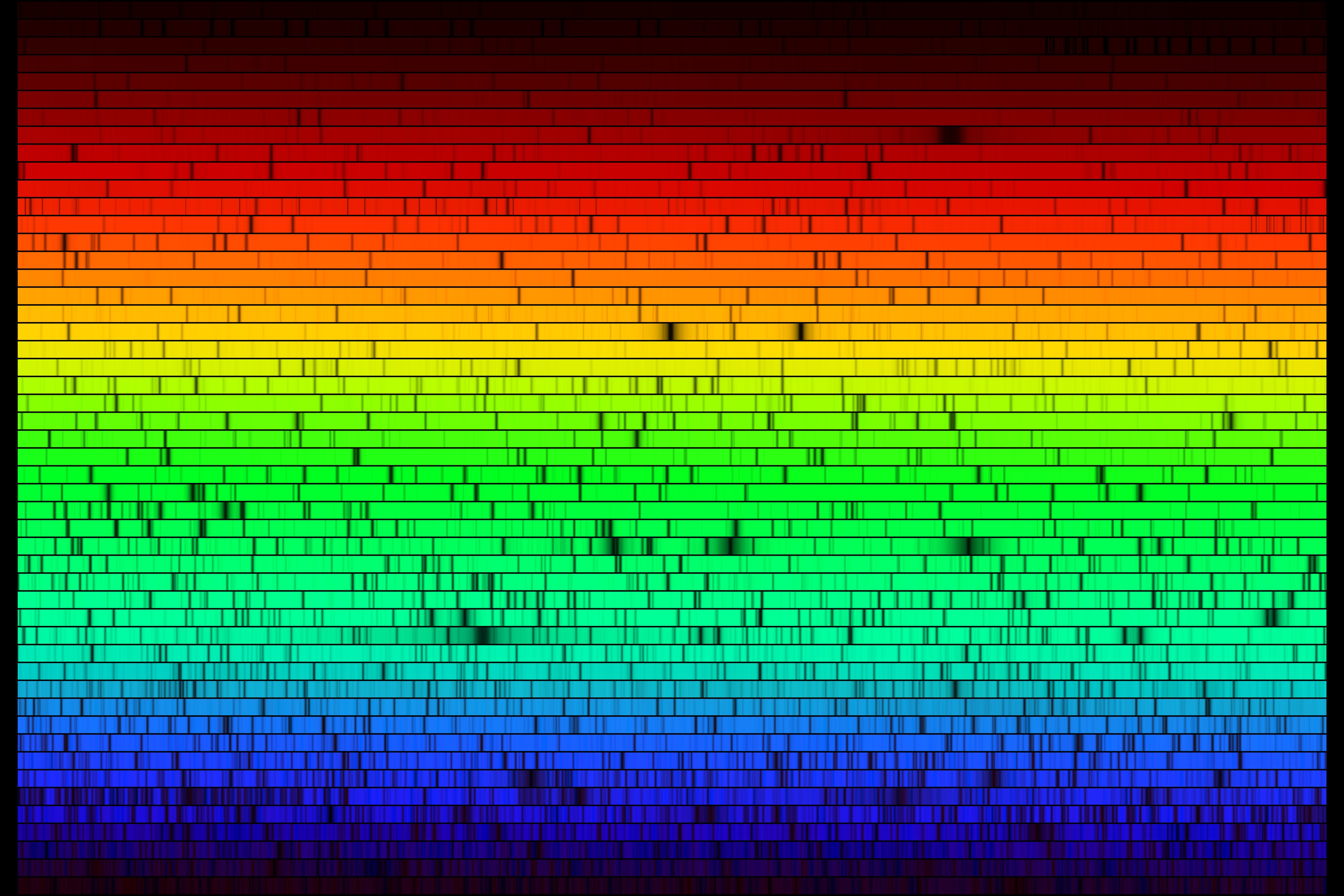
If none of this had happened, I wouldn’t be an astrophysicist today. Like most people in my field, my entire research career rests on spectral analysis of light from distant objects. I’m endlessly amazed by it—not just for the meaningful work it gives me, but for the practical wonders and knowledge it’s unlocked for humanity. I love science. But I’m not blinded by that love into believing we could build a stable society on science alone.
Science-loving skeptics often point out that science’s greatest strength is its self-correcting nature—always updating, refining, even revolutionizing what we “know” with fresh evidence. I agree completely. But that very strength makes it a shaky foundation for society. How do you ground laws, ethics, and daily governance in something that’s perpetually evolving through paradigm shifts? Science hasn’t stood still since its modern inception, and that dynamism—while powerful for discovery—renders it unreliable as the basis for policy or civilizational order.
If you think the big scientific revolutions are behind us, consider what’s unfolding in cosmology right now, largely thanks to the James Webb Space Telescope (JWST). JWST has delivered stunning images and data from the early universe, but it’s also deepened major tensions in the standard model of cosmology. The “Hubble tension”—discrepancies in measurements of the universe’s expansion rate—has only grown sharper, with JWST data pushing some conflicts past high statistical significance thresholds. Early galaxies appear far more massive and mature than models predicted, challenging timelines for cosmic evolution, star formation, and even assumptions about dark energy or matter. These aren’t minor tweaks; they’re forcing cosmologists to question foundational assumptions, highlighting how limited our perspective remains even with cutting-edge technology.
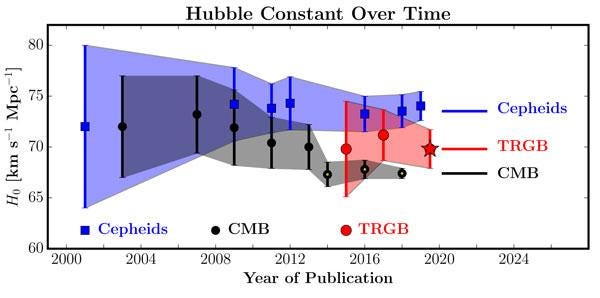
These are examples of legitimate scientific inquiry overturning prior legitimate beliefs—limited as we always are by technology, perspective, intellectual inertia, and human emotion. Better tools reveal that even cherished constants (like dark energy’s behavior) may need rethinking. This could revolutionize our model of the cosmos.1 It’s truly exciting stuff.
As susceptible as even the most mature sciences are to change, the science of human behavior is on far shakier ground. Psychology, psychiatry, and related fields—arguably far more relevant to building a society than cosmology is—have produced no laws of human behavior comparable to those in physics or chemistry. Early efforts like Freudian psychoanalysis, which relied on speculation rather than rigorous scientific methods, have been largely set aside. Though these disciplines continue to advance, they remain nascent and lack the robust, predictive power of mature sciences. They still need their revolution to join the ranks of true science. This makes them a particularly unsteady foundation for any society ordered the way positivists imagine.
But all of this assumes the scientific enterprise is functioning as a pristine gatekeeper of truth, with editors and publishers rigorously filtering for quality. Many non-believers who put immense trust in “the science” seem unaware of the deepening crises in scientific publishing. Scandals involving outright fraud keep surfacing. Last March, The Scientist covered how Paediatrics & Child Health (the journal of the Canadian Paediatric Society) admitted that 138 case reports published over 25 years were fictional—fabricated cases presented as real, now retroactively corrected and impacting over 2,000 citing studies. It’s deeply troubling.
A 2025 paper in the Proceedings of the National Academy of Sciences (PNAS) argues that while fraud remains a minority of publications, it’s growing at an alarming rate that outpaces legitimate science. Titled “The entities enabling scientific fraud at scale are large, resilient, and growing rapidly,” it describes an emerging “industry” of paper mills, brokers, and predatory outlets involving coordinated networks of editors, publishers, and middlemen. Fraud isn’t just lone bad actors anymore—it’s systematized.
Defenders of science tell me this fraud is “irrational.” But rationality depends on your motives. If your goal is prestige, funding, or pushing a pet theory—and you think you won’t get caught—then fraud is perfectly rational for an unethical person. Not everyone in science is a saint, and rooting out every bad actor is nearly impossible.
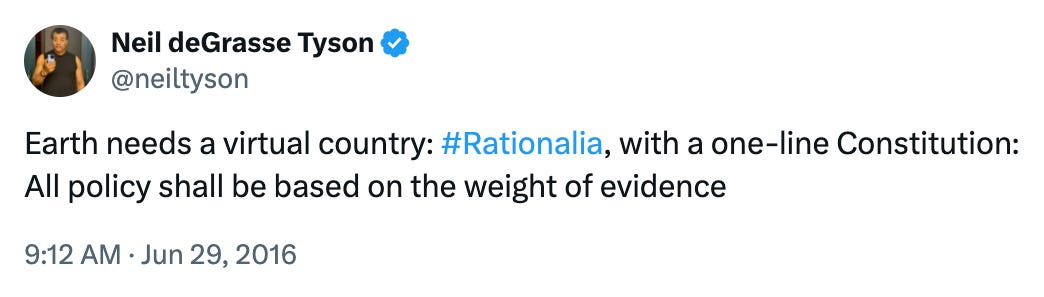
Years ago, Neil deGrasse Tyson got roasted for floating the idea of “Rationalia”—a virtual country with a one-line constitution: “All policy shall be based on the weight of evidence.” This is civilizational policy as dreamed up by a smart 14 year-old. It sounds tidy in theory, but most people instinctively understood it ignores how evidence changes, how scientists are fallible humans prone to bias and fraud, and how “weight of evidence” offers no guidance on core human questions like justice, meaning, or managing our messier proclivities. Science excels at describing the material world. It doesn’t tell us how to govern hearts, curb vices, or cultivate virtues.
How do you base societal rules on something that perpetually shifts and is vulnerable to such mundane corruption? Much of what sustains civilization comes from accumulated human experience, trial-and-error over generations, and yes—revealed wisdom.
Look at the French Revolution itself: it tried to ground governance in pure reason, without religion. Ironically, it ended up guillotining one of its greatest scientists, Antoine Lavoisier (the father of modern chemistry), along with many other intellectuals. As the great philosopher Arnold J. Rimmer once quipped, “You always become the thing you hate the most.” Direct assaults on tradition rarely deliver the utopia promised. History keeps showing us this. Why haven’t we learned?
Societies that survive do so because they’ve absorbed hard-won lessons—through painful experience, cultural evolution, and sometimes divine revelation, as in the Bible. These rules and traditions get passed down not just intellectually, but emotionally—the strongest way to make them stick. Think about your own life: how many of your deepest personal rules come from raw emotional lessons rather than cold data? You can lay out all the studies on smoking to a friend whose health is tanking, and as they contemplate the weight of evidence they’ll say, “Yeah, I know,” and keep smoking. Now it’s uncool to smoke, but the rates only dropped meaningfully after emotional campaigns shamed it and regulations made it nearly impossible to do in public.
We’re now relearning the hard way the costs of eroding the traditional family—skyrocketing loneliness, mental health crises, economic instability for women and children, higher rates of poverty and crime, and societal fragmentation. As religious influence fades, we’re forced to rediscover these truths through lived consequences, not lab experiments. It’s the pattern in Israel’s biblical history: repeated cycles of faithfulness, rebellion, judgment, repentance, and restoration. If our civilization endures, that’s how we’ll learn too—as stubborn children finally feeling the sting of consequences and realizing our Parent was right.
One thing I find profoundly practical about Christianity for civilization-building is how it anchors everything in love. Jesus distills the law into two commands: love God, love your neighbor. What could be more emotionally compelling? Sure, it sometimes gets framed through fear of wrath or hell—and some people need that. But at its core, it’s relational—our bond with our Creator, with fellow believers, even with enemies. We’re called to love them. And we live under the gaze of a Heavenly Father who knows us intimately. That perspective has motivated real change in my own life—not primarily from dread of punishment, but from gratitude for a perfect, loving God who’s done so much for me. I don’t want to disappoint Him. Science never gave me that transformative lens; my faith did.
Positivism promised a clean, empirical path to truth and order. Science has delivered wonders in understanding the material world—but it falls short as a blueprint for human flourishing. We need science—it’s one of God’s many gifts to us. But we also need the wisdom that outlasts shifting paradigms: the emotional anchors of tradition, the moral clarity of revelation, and the humble recognition of our limits. In a universe full of surprises, that humility might be the most scientific stance of all.

If you enjoyed the article, I’d really appreciate it if you hit the like button below. It helps me see which topics resonate with readers and it boosts my writing. There’s also a share button if you’d like to send this to a friend who might enjoy the science-and-faith conversation.
Please also feel free to comment or ask questions below. If you’re new here, I encourage you to check out my FAQ first.
If you’re a free subscriber and would like to support my work, please consider a paid subscription. Researching and writing these pieces takes time and effort, but I’m committed to keeping my best work—and the vast majority of my content—free for everyone. The generosity of my paid subscribers makes that possible.
That said, it’s extremely unlikely Big Bang cosmology will be overturned. The overarching model of a universe that began billions of years ago and developed over time to the universe we observe today is extremely robustly supported by data and math.
Sarah,
I think this is the best article you have written that I have read. You give lots of great examples and show why science can never be our foundation for living.
If I may add, one of the great attractions of scientism or the worship of science, is that there is no need to bow the knee to science, and your Idol allows you to continue to do whatever you want, and to still think highly of yourself.
Today is the 250th anniversary of the U.S. I am thankful to live here for all the reasons we can all be thankful about. But 50 years ago, at the time of the 200th anniversary, someone wrote a brief article stating that our real god in America is complete freedom. We believe that we should be able to do whatever we want "as long as it doesn't hurt anyone." But our radical individualism dictated by this Idol leads to pain all around us, because we are not as smart as we think and not as moral as the Ten Commandments or the Sermon on the Mount.
Glenn G. Wood, M.D,
Another thing - anthropologist always use to say that religion came after agriculture but now they are changing their tune. Stone age settlements have shown that it was religion first and then agriculture.