


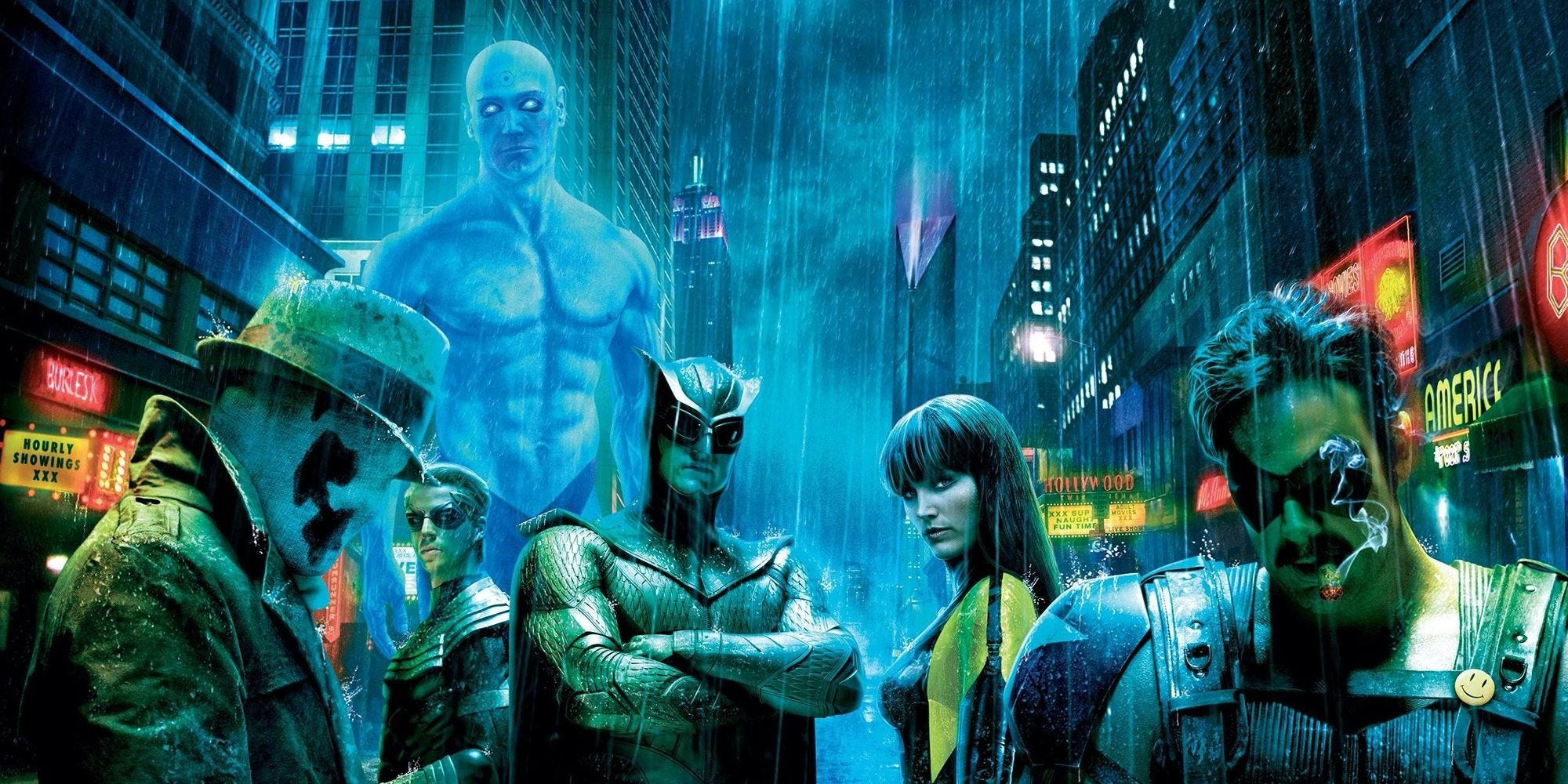
We’re on vacation, so my husband and I are watching a lot of movies this week. One that stood out was the extended cut of Watchmen, a movie I hadn’t seen in years. Stylistically, it delivered exactly what I remembered: top-tier production values with stunning cinematography, incredible sets, and fantastic costumes. But in terms of soul, it felt far more depressingly empty than I recalled. This film offers a much more realistic—and far darker—portrayal of what superhumans would actually be like than anything in the Marvel or DC universes.
I know a lot of us are feeling superhero fatigue these days, but I still enjoy the best movies of the genre. I’m a fan of Christopher Nolan’s Dark Knight trilogy and the early MCU films up through Endgame. Those heroes are honorable, likable, and dependable. They share almost nothing in common with the dark and deeply flawed figures in Watchmen.
The film is set in an alternate 1985. Richard Nixon is still president (in his fifth term, after the 22nd Amendment was repealed), the United States won the Vietnam War thanks to the intervention of a real superhuman, and the Cold War is at a fever pitch with the Doomsday Clock permanently stuck at five minutes to midnight. Costumed vigilantes once operated freely—first as the Minutemen in the 1940s, later as the Watchmen—but public backlash and a police strike led to the Keene Act of 1977, which outlawed non-government-sanctioned masked adventuring. Most retired. A few didn’t. When one of them, the Comedian, is murdered, the investigation unravels a conspiracy that threatens the entire world.
Sally Jupiter was the original Silk Spectre, a glamorous, publicity-savvy crimefighter from the Minutemen era. Her daughter, Laurie, takes up the mantle as Silk Spectre II. Dan Dreiberg is the second Nite Owl—an owl-themed gadgeteer and tech genius who inherited the identity from the retired original, Hollis Mason. He’s soft-spoken, a bit paunchy in retirement, and the most “normal” of the bunch—until he puts the costume back on.
Rorschach’s real name is Walter Joseph Kovacs. A small, narrow-faced man who at first glance seems weak and vulnerable, he wears a white mask with constantly shifting black inkblots. His zeal for justice was born from a harsh childhood: a violent, unloving prostitute mother, and relentless bullying from bigger kids. He becomes a hyper-violent vigilante who sees the world in absolute black and white—no mercy, no compromise, ever.
The Comedian, whose real name is Edward “Eddie” Blake, is a cigar-chomping, grinning psychopath who treats life as one long, cruel joke.
Then there’s Dr. Manhattan—originally Jonathan “Jon” Osterman, a mild-mannered nuclear physicist. In 1959 he is locked in an Intrinsic Field Subtractor during an experiment, disintegrated, and somehow reconstructs himself as a glowing blue god. He can manipulate matter at the atomic level, teleport himself and others across vast distances (including to Mars), perceive all of time—past, present, and future—simultaneously, create duplicates of himself, grow to giant size, disintegrate people with a thought, and is essentially invulnerable and immortal. The other characters are super-strong and super-fast, but he’s the only true superhuman in the story—someone who is above and beyond humans. Because of this, he becomes increasingly detached from humanity, finally retreating to Mars after his only remaining link—his romantic partner Laurie (Silk Spectre II)—finally leaves him because of this cold detachment. With his abilities, he could save millions of people from the imminent threat of nuclear disaster, but he chooses not to. Earlier, he casually dumps his first romantic partner, Janey Slater, once she starts to age while he remains eternally young and perfect; he becomes attracted to the younger, super-hot Silk Spectre II instead.
The characters are shown doing good deeds. Dr. Manhattan ends the Vietnam War almost single-handedly, turning it into a quick American victory and later serving as the ultimate nuclear deterrent. Silk Spectre and Nite Owl demolish street thugs. Rorschach sends dozens of bad guys to prison (or worse). But there’s an undercurrent of nastiness to it all. Silk Spectre and Nite Owl save children from a burning building, but also engage in stylized, sexy violence against street thugs just for the thrill, like it’s a workout or blowing off steam. They clearly enjoy hurting people—albeit those who “deserve” it. Rorschach is the judge, jury, and executioner—a walking grenade of hatred for unrighteousness, ready to detonate at any moment. Like Judge Dredd, he offers zero mercy.
The Comedian is the most recognizably vile character. He violently attempts to rape Sally Jupiter (and is revealed to be the father of Laurie, the product of a later willing tryst). He murders a pregnant Vietnamese woman who was carrying his child, after she demands accountability. Later, with a big grin, he jumps enthusiastically into a crowd of protestors, inflicting maximum violence with tear gas and bullets. He thoroughly enjoys hurting people whether they deserve it or not.
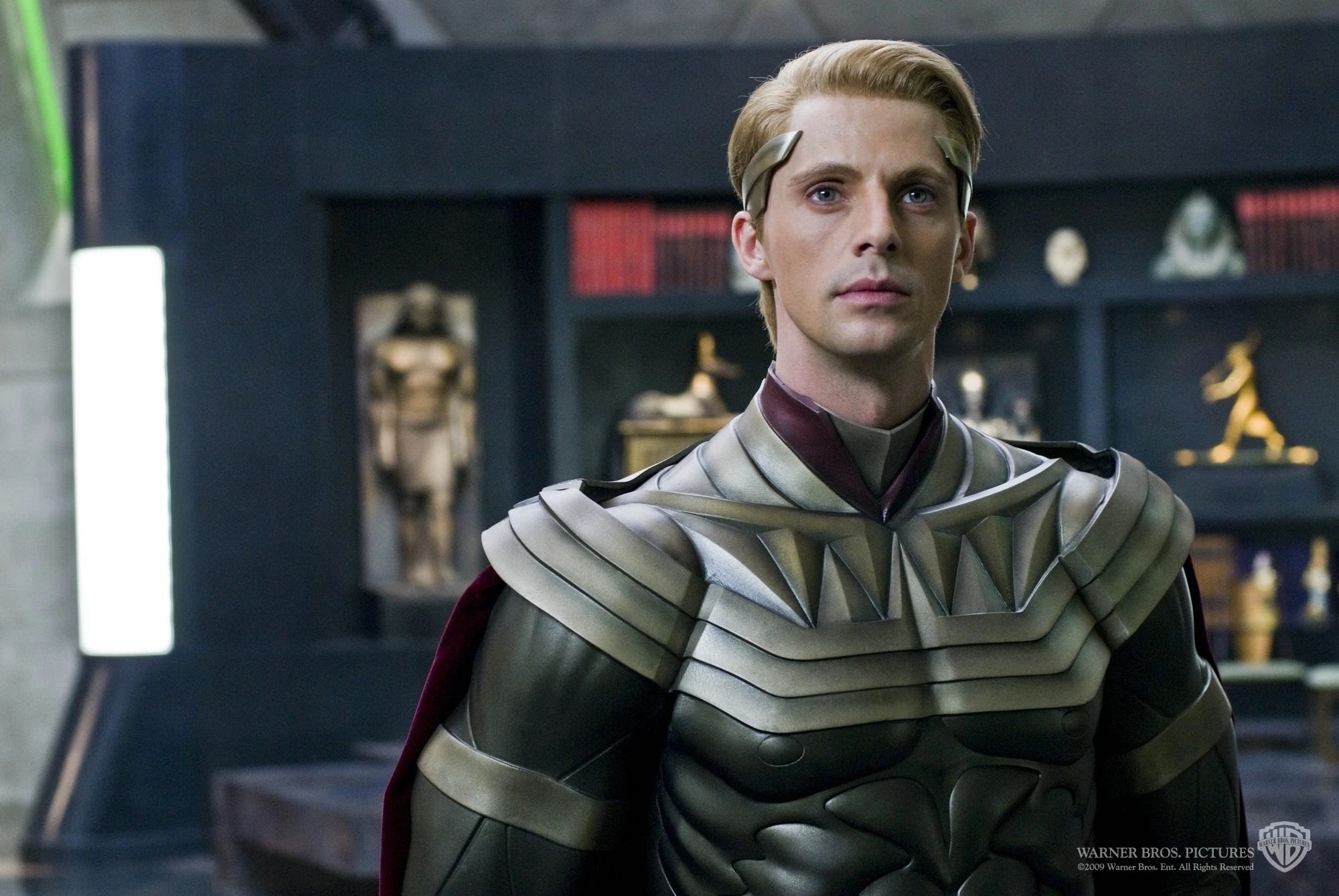
Ozymandias is the most complex character, and ostensibly the villain. Adrian Veidt, “the smartest man alive,” is the only superhero to reveal his true identity following his retirement after the Keene Act is passed. It turns out he’s the one offing superheroes (or arranging it) and has engineered a plan that will kill millions of people in order to save billions, framing Dr. Manhattan for all of it. He has built enormous energy reactors based on Manhattan’s technology, planning to detonate them simultaneously in major cities around the world. The explosions will carry Manhattan’s unique energy signature, so the world will believe he’s gone rogue and attacked humanity. Fifteen million will die, but he believes the United States and the USSR will broker a peace deal against their new common enemy, ultimately saving billions of lives. Dr. Manhattan realizes the genius of this plan and assents to it, planning to leave for another galaxy anyway. Rorschach, in his devotion to righteousness, refuses to keep the secret and is reluctantly vaporized by Manhattan for it.
The characters occasionally exhibit some self-awareness. Rorschach, after one of his particularly intense monologues, tells Nite Owl, “I know it can be difficult with me sometimes.” The Comedian knows he’s a garbage person—he repeatedly calls life itself “a joke” and says, “Once you realize what a joke everything is, being the Comedian is the only thing that makes sense.” He laughs at the absurdity of it all, even while committing atrocities. Dr. Manhattan, for all his detachment, is pained by the lie that he caused Janey and others cancer, and eventually admits he was wrong about the miracle of human life. Ozymandias claims to feel every death he causes, though whether that’s genuine humility or just another calculation is left ambiguous.
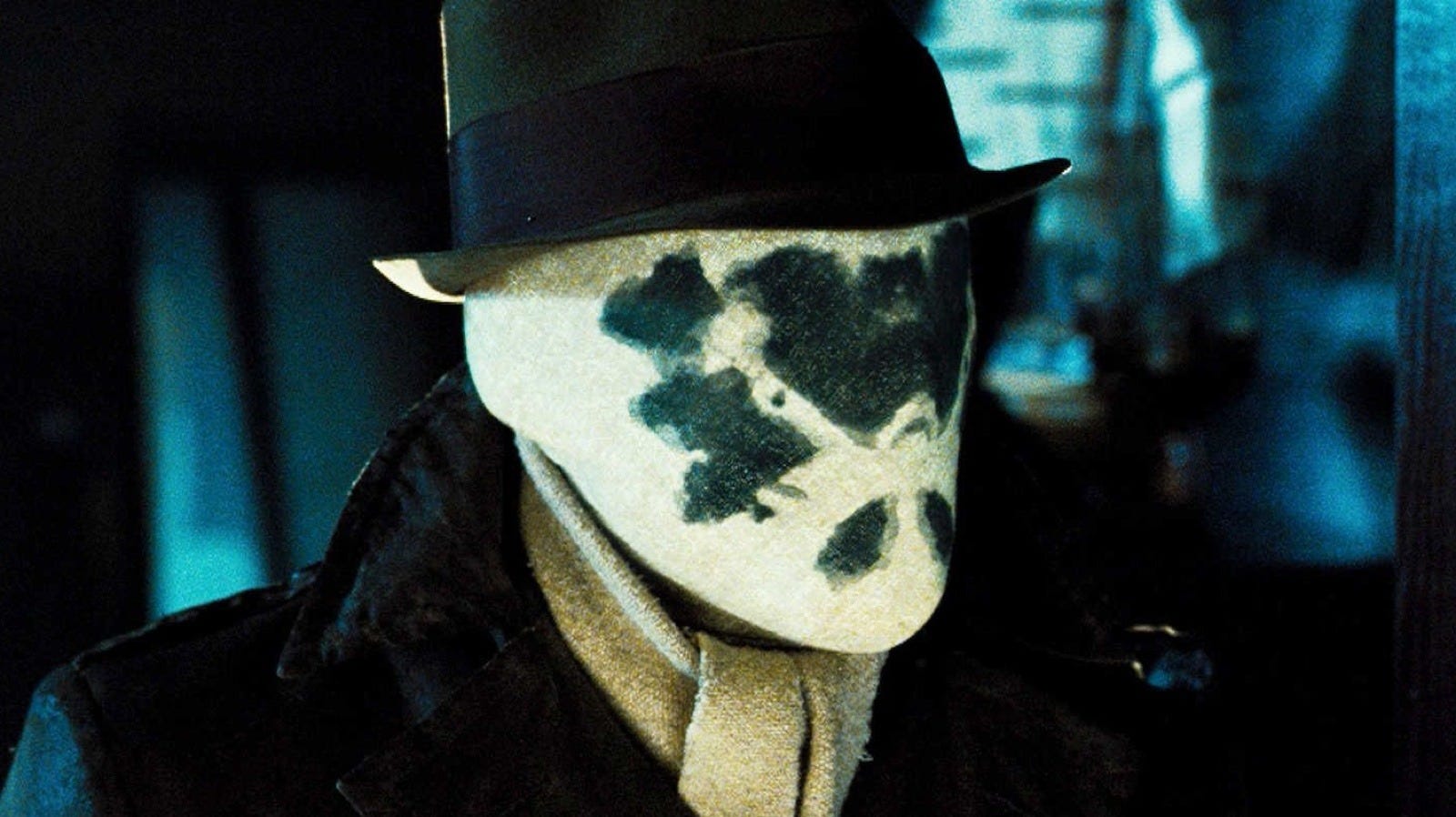
I remembered nothing of the plot the first time I watched this movie. I kept expecting a clever solution to the problem set up by Ozymandias so that millions of people wouldn’t die. But it doesn’t happen. Millions die in the energy-weapon strikes that vaporize major cities around the world. In New York City, we see countless people—including some everyday characters we’ve come to know, a newsstand guy and a nerdy teenager who reads comics—killed in slow motion as layer after layer of their anatomy is vaporized. In the aftermath, the United States and the USSR do indeed broker a peace deal in this alternate-reality history that prevents mutually-assured destruction. At the end, we’re shown New York City rebuilding in the massive crater where the “Manhattan” attack hit. Hooray, I guess? But the rug is pulled out from under us when we see the journal Rorschach mailed to a newspaper—detailing what really happened—delivered after his death.
The extended cut, which I’d not seen before, inserts the animated Tales of the Black Freighter—a grim pirate comic-within-a-comic. We get to “read along” with the soon-to-be-vaporized teenager, who’s getting it bit by bit at the newsstand every day because he can’t afford to buy the comic. It’s the story of a marooned sailor who does increasingly monstrous things (including killing innocents and using corpses as a raft) in a desperate attempt to save his family from the ghostly Black Freighter. When he finally reaches home, he has become the monster, and the Freighter is waiting for him. Alan Moore explained that it primarily parallels Ozymandias: a man who commits genocide out of a twisted desire to “save” the world, only to become the very horror he feared. The nerdy kid keeps reading because he wants to see the resolution (as did I). When he gets to the end, he’s annoyed by how darkly pointless it was. (So was my husband, by the way, who had no patience for these weird, gross inserts.)1 Kind of the perfect metaphor for this movie—and for a world without hope.
Rorschach is all justice, no mercy. The Comedian is a life-support system for psychopathic violence. Ozymandias is all intelligence and cold calculation, the kind of pure intellect that thinks it knows what’s best without humility. Silk Spectre and Nite Owl come across as the most relatable, genial people of the bunch, but there’s something off about them too. They get a creepy thrill from the violence and the costumes. Even their “good deeds” feel performative.
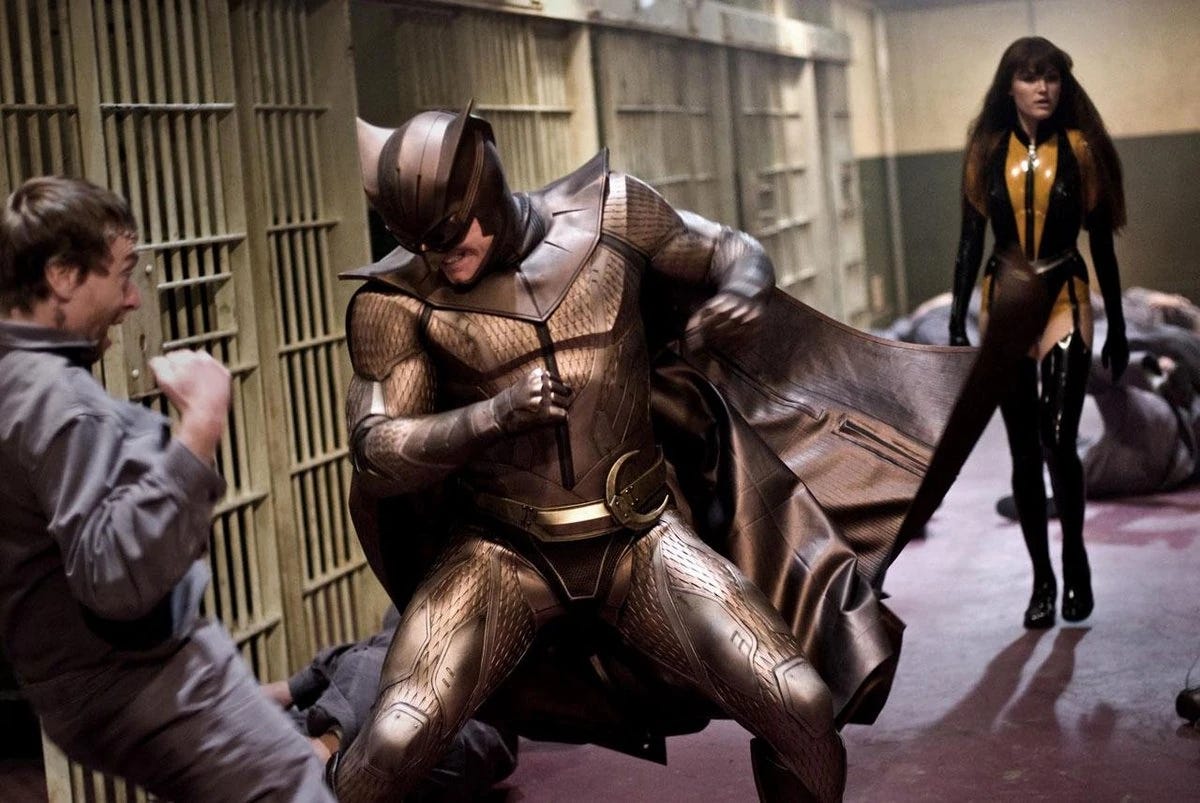
The Watchmen are a little like Batman in terms of rough, dark, anti-hero quality, but Batman doesn’t have superpowers. These characters do, and honestly they’re kind of terrifying. They don’t have the do-gooder, highly moralistic nature of Superman, Wonder Woman, or Spider-Man—superheroes you feel like you can trust. Traditional superheroes have mercy, but these guys don’t. They enjoy hurting people, even bad guys. Superman would rescue a kitten stuck up in a tree—the Comedian would probably shoot it.
Iron Man is my favorite superhero. Tony Stark is highly intelligent and wealthy, and those are the sources of his power, but he’s still just human. He starts off as a glib and charming, but superficial, guy. We get to watch him experience a compelling moral arc after the trauma of being kidnapped and witnessing the effects of his weapons in the real world. This causes him to become a believably deeper character who’s on a mission, but is still realistically flawed.
Superman is another favorite of mine. He’s clearly a secular Messiah figure, and that’s why he’s loved and trusted by generations of fans. His creators, Jerry Siegel and Joe Shuster, were Jewish teenagers in 1930s Cleveland, sons of immigrants who had fled persecution. Siegel later said he created Superman after hearing about the oppression of Jews under the Nazis: “I had the great urge to help the downtrodden masses… Superman was the answer.” Superman’s Kryptonian name, Kal-El, echoes Hebrew for “voice of God” or “vessel of God.” Like Moses, he’s sent away as a baby to escape destruction, raised by foreigners, and becomes a deliverer. He is the ultimate assimilationist fantasy and protector of the weak—power married to goodness. That’s the reason we root for him. But the only way to make him believable was to have him as an extra-terrestrial, because no human could be that way.
Our love of superheroes, I think, reflects a deep human longing: to be cared for and protected by a super-being who can deliver real justice. We crave someone strong enough to set the world right. But imagine what would happen if we could simply superpower ordinary humans as they are—with fallen nature intact. They would be something like the Watchmen, or probably worse: humans detached from humanity, overconfident in their intelligence, psychopathic, overzealous. We would not want to inhabit a world with such beings.
Alan Moore, the creator of the original Watchmen comic, has been very clear about his intent. He set out to deconstruct the superhero genre and show how horrifying real superhumans would actually be. Moore is an atheist (with some complicated pagan leanings later in life), and the story reflects a thoroughly godless universe. There is no room for God in Watchmen. Dr. Manhattan wonders whether the world is “a clock without a craftsman.” Rorschach’s journal records looking at the sky after a massacre and concluding “God was not there. The cold, suffocating dark goes on forever, and we are alone.” The whole narrative is relentlessly secular and therefore relentlessly bleak. The comic-book-within-the-comic is a perfect metaphor for the pointlessness of existence if there is no God: a story that ends in darkness and leaves the reader frustrated by how empty it all was.
We’re influenced as a culture by Marvel and DC Comics movies to think superheroes might be sort of nifty. Thor is huge and powerful, but he’s also kind and funny. Captain America is the epitome of the sort of superhero we would love—super-strong but all do-gooder. But in reality this kind of power without super-goodness would be terrifying and horrible. Such characters would be as removed from ordinary humans as they could be, either in a Dr. Manhattan cold detachment sort of way, a cruelly vicious way like the Comedian, or a coldly visionary sort of way like Ozymandias.
The truth is, the only superhuman we have and the only one we need is Jesus Christ. The true God walking among us on Earth. He had all the power in the universe, but instead of violently doling out justice, he healed people and gently drew them to Him. He mingled with the lowly and hated. He lovingly pointed out their unrighteousness and called them to repentance and union with the Father. He subjected himself to the sort of violence meted out by the Watchmen, and all for us. He is a superman but also an anti-superman. This is the only one we have and the only one we need.
I appreciate Watchmen for this honest glimpse at an alternate world where there are gods but no God, even if it was depressing. The only way for a human to have superpowers without the horribleness is to have supergoodness, and only God has that. The movie, for all its style and craft, left me feeling empty and annoyed precisely because it has no room for that goodness. The Black Freighter kid was right to feel cheated by the ending. Without God, every story—every existence—ends the same way: darkly, pointlessly, with the Freighter waiting to take us to oblivion.
We don’t need Watchmen. We already have the one true Watchman who never sleeps, never compromises mercy for justice or justice for mercy, and who entered the darkness Himself so that we wouldn’t have to stay there. That is the only story that doesn’t leave us empty. And P.S.—it’s true.

If you enjoyed the article, I’d really appreciate it if you hit the like button below. It helps me see which topics resonate with readers and it boosts my writing. There’s also a share button if you’d like to send this to a friend who might enjoy the science-and-faith conversation.
Please also feel free to comment or ask questions below. If you’re new here, I encourage you to check out my FAQ first.
If you’re a free subscriber and would like to support my work, please consider a paid subscription. Researching and writing these pieces takes time and effort, but I’m committed to keeping my best work—and the vast majority of my content—free for everyone. The generosity of my paid subscribers makes that possible.
I think I lost some cred with my husband when, in response to his complaint that the movie was long and boring, I insisted our patience would be rewarded. He kind of liked the Rorschach character, but that was more than balanced out by Dr. Manhattan’s persistent full nudity. (I guess it was supposed to make him seem even weirder.) I counted at least five times my husband said, with increasing annoyance, “Can't this guy just put on some pants?”
Reminds me of our version of the fickle, violent, jealous and dangerous Greek and Roman “gods.” But for a modern audience. Have you watched, and do you like, the modernized “Animal Farm,” which Angel just launched?
I appreciate Moore and Nitsche for the same reason: they are honest about what their atheism really has to offer humanity--meaningless, unrelenting and inescapable darkness.