


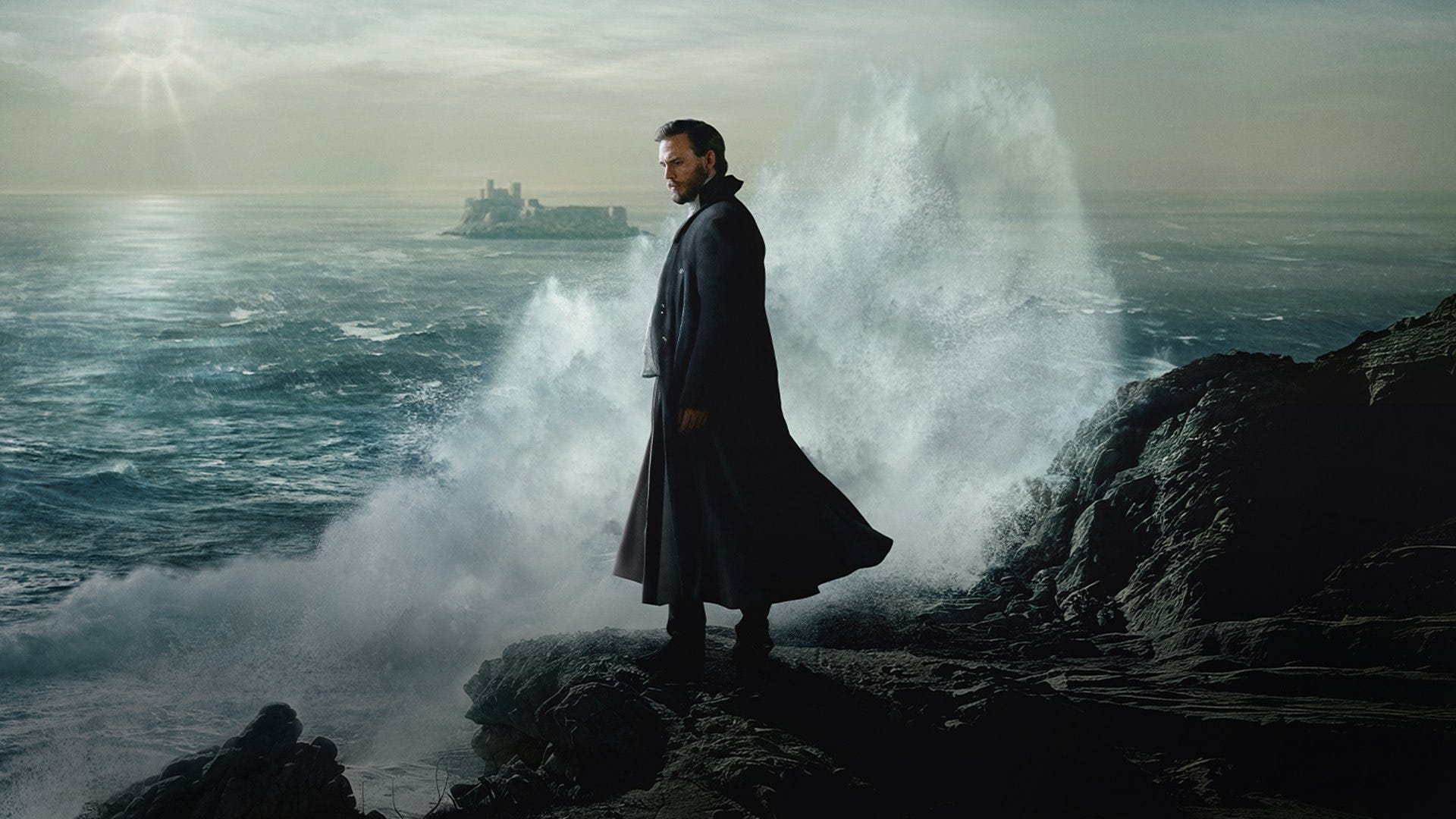
When I wrote “Five brutally honest things about converting from atheism to Christianity” I mentioned that, in addition to my research in astrophysics, reading The Count of Monte Cristo moved me toward belief in God. Some of you asked how it factored into my conversion, so let’s get into it.
Before I begin, let’s get this out of the way: I’m not claiming The Count of Monte Cristo is a secret weapon against atheism. What it did for me was remove a personal stumbling block to belief in God and clear the way for my eventual conversion to Christianity. (The full story of my conversion is here.)
Religion didn’t factor into my upbringing at all. My parents—both lapsed Catholics—were only mildly hostile to it. For whatever reason, my brother and I grew up far more hostile to religion than they were. Unlike our Baby Boomer parents, who had been raised with religion, we were raised completely outside that world. If I had to guess, I would chalk up a good deal of my hostility to my environment—secular Canada, where I grew up, and popular media. My brother and I watched a lot of Star Trek—Gene Roddenberry was a well-known atheist who suffused his creation with secular values. I also watched Carl Sagan’s Cosmos, which at times painted Christianity as a brake on human progress. But the most lasting damage I think came from a TV show called Little House on the Prairie.
Our parents were very selective about television. One of the few Mom-approved shows was Little House. I kind of hated it, but when you’re a kid in the pre-streaming era and that’s what’s on, you watch it. I was a space kid. After being blown away by Star Wars, I wanted to watch people whooshing through hyperspace, solving galactic problems, and battling bad guys. I didn’t want poor farmers scraping by on a prairie and sitting through sermons. The worst part of the show was how I perceived the characters standing up to evil. I still remember Pa getting beaten badly by two violent drifters after they harassed Ma. Instead of blasting them with a phaser, he got his clock cleaned and thrown into the back of a wagon like a sack of seed corn. Scenes like that cemented an idea in my adolescent brain: Christianity made earnest people weak, vulnerable, and foolish. That idea stuck, because I had no examples in my life to counter it.
Children already feel vulnerable. With examples like this, Christianity can look like a force multiplier for everything that makes the world seem frightening. A lot of kids love adventure stories because they teach that strength, courage, and cleverness are like armor. From Star Trek, Battlestar Galactica, and Buck Rogers I learned that you can fight back against evildoers, outsmart them, out-muscle them, and even have fun doing it.
By my late teens and early twenties I was an ardent Christian-hater. It wasn’t based on knowing anything about Christianity or Christians. It was based a caricature that had metastasized in my mind: meekness meant weakness, and Christian virtue meant being the kind of person who gets beaten up like a chump. I didn’t want to be weak and foolish. I wanted to be strong and smart. I would therefore never be religious—and especially not Christian.
In university, that atheist worldview began to crumble when I started asking questions about the belief system I’d been raised with. What troubled me most was where our sense of morality came from, and how, on the brute materialist facts of the universe, we could claim anyone had inherent worth. What “worth” is there when, sooner or later, the universe mercilessly kills everything that lives in it? The universe permits life, but it seems utterly indifferent to it. I was deeply troubled by this. Unable to come up with a solution, I back-burnered these questions and focused on my studies.
In the summer of 1999 I took a research internship at UC San Diego’s Center for Astrophysics and Space Sciences. That was the summer that changed everything.
I’ve written and talked many times about how my work that summer—which opened my eyes to the overwhelming appearance of design and the exquisite fine-tuning for life in the universe—turned my mind toward God. That solved half the equation: where the universe came from, and why it’s so incredibly suited for life. The other half was the moral question. God solved that, too. What finally softened my heart so that my intellect could accept it was a French novel.
Circumstances conspired to get me to bury myself in books that summer. It was the late 1990s and there was no such thing as wi-fi or streaming. The UCSD campus is beautiful with its sunlit southern California coastal vibe, but I was housed in one of the most depressing dorms imaginable—a giant concrete complex officially called Warren Residential Hall, but referred to by students back then as Little Beirut. There was no wi-fi, no TV, nothing that even hinted at entertainment. I went to a lot of movies that summer, but I needed something other than those bare walls when I got home. I went to the local bookstore and chose a stack of Dilbert books and the most enormous novel I could find: The Count of Monte Cristo by Alexandre Dumas.
A lot of you already know the story, or know the movie versions, which usually focus on the revenge. Edmond Dantès, betrayed by his jealous friends on his wedding day, is framed for treason. He’s thrown into the Château d’If, one of the worst prisons in France, and left there to rot for fourteen years. During those years, he befriends a fellow prisoner who teaches him many things and tells him of a vast treasure hidden on the island of Monte Cristo. Dantès escapes, finds the treasure, and returns to France wealthy, worldly, hardened, and unrecognizable. With his vast wealth and the cunning he learned in prison, he sets out to destroy the men who ruined him. He carries this out methodically, brilliantly, and with the kind of strength and intelligence I had always admired.
But then comes the twist I never anticipated. By the time Dantès reaches the last of the betrayers, his hunger for vengeance has vanished. He realizes it belongs to God, not to man. He pardons his last betrayer and, having realized that God had already more than restored what he lost, he gets on with his life. That was a revelation to me: God as the author of morality, the dealer of justice, the restorer of things lost.
I’d picked up the habit of reading while I walked across campus. One afternoon, as I was immersed in the final pages of the book, I stopped in my tracks. There on that sunlit path the two halves of the equation met. The evidence I was seeing in astrophysics and Dumas’ story were pointing to the same thing: God. God accounted for the design of the universe and for the moral weight of a human life. It mattered that the moral answer arrived in a rich, complex story, through a character who had saved himself through strength, courage, and cleverness—and who, when handed power over the people who had wronged him, chose forgiveness instead of wrath.
That’s what finally broke the old picture of Christianity as weakness. It’s unfortunate that in English “meek” sounds so much like “weak.” I learned from this story that Christian meekness is anything but weakness. Only the strong can be meek. That made a huge impression on me.
As powerful as all this was, science and French literature did not get me over the finish line—but they did get me in the race. Seven years later, Gerald Schroeder’s The Science of God inspired me to pick up a Bible for the first time in my life. That’s when I headed toward the finish line and accepted Jesus Christ as my Lord and Savior.
I hope Christians take one more thing from this: the arts matter in witnessing for our faith. A well-written novel, a powerful film, a moving song can reach places in a person’s heart that no amount of airtight logic can touch. Stories can smuggle a moral universe into someone who has already decided they will never sit still for a sermon. That’s what Dumas did for me. Without preaching, he showed me a strong man laying the sword down—and I finally understood that this, too, was strength and intelligence.

If you enjoyed the article, I’d really appreciate it if you hit the like button below. It helps me see which topics resonate with readers and it boosts my writing. There’s also a share button if you’d like to send this to a friend who might enjoy the science-and-faith conversation.
Please also feel free to comment or ask questions below. If you’re new here, I encourage you to check out my FAQ first.
If you’re a free subscriber and would like to support my work, please consider a paid subscription. Researching and writing these pieces takes time and effort, but I’m committed to keeping my content free for everyone. The generosity of my paid subscribers makes that possible.
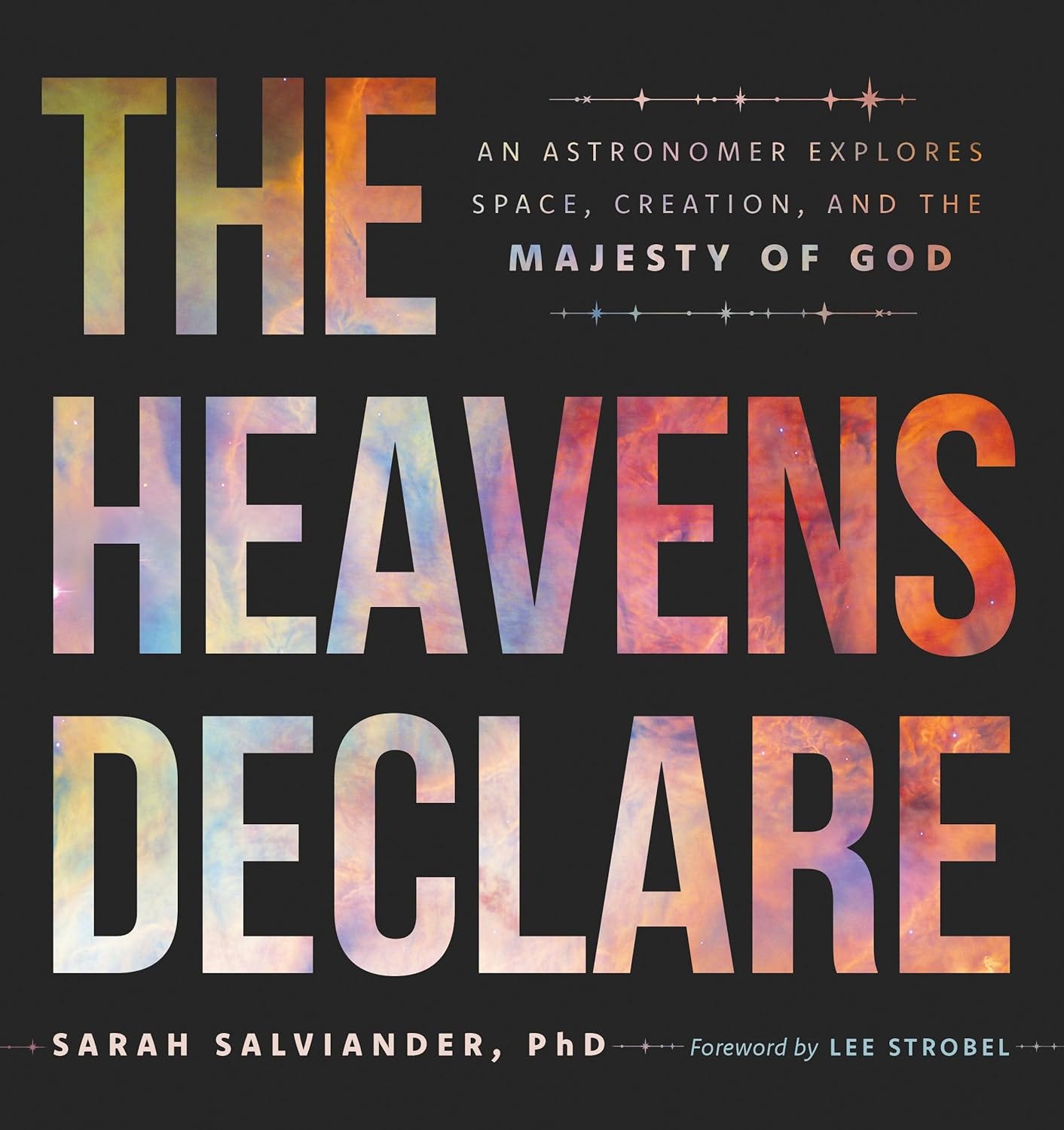
One more thing, friends. My first book, The Heavens Declare, comes out November 3rd. It explores the foundation of nearly everything I write here—science, Scripture, and how the heavens truly declare the glory of God—all with more than 100 beautiful images of His handiwork. If you enjoy my insights, I know you’ll love the book. (And it makes a thoughtful gift for someone else who might enjoy it, too.) Pre-orders in these final weeks before launch really help with the success of a new book, so if you’re inclined, you can pre-order it on Amazon here.
Thank you Sarah, and so well written. I took a similar path from science so called, to God. And only last month did I watch count of Monte Christo, perfect timing!
Fascinating. God seems to shape a path to Him that is a particular to each individual. Yours included a boring dormitory and an unplanned book buy.