


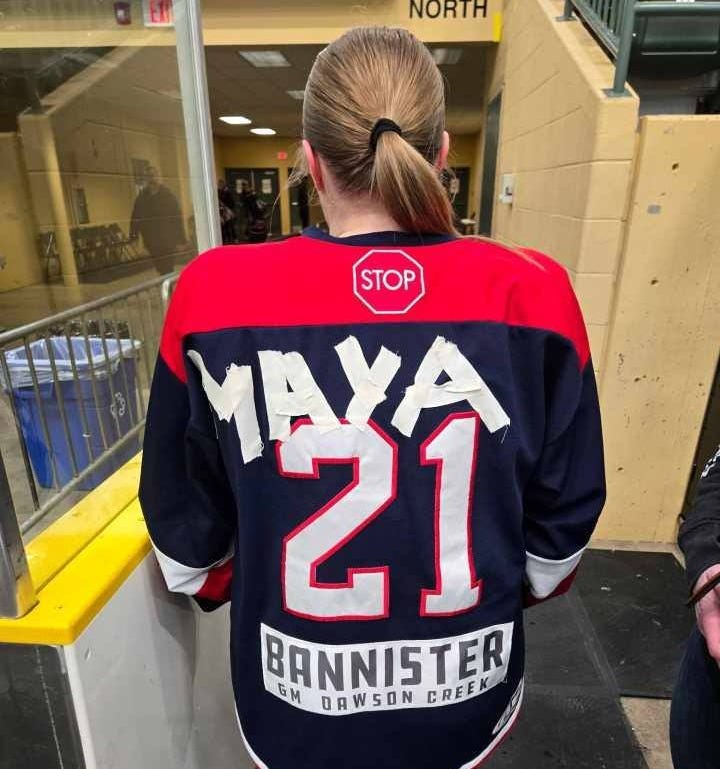
On February 10, 2026, a mass murderer went on a rampage in Tumbler Ridge, B.C., killing nine people—including five children and a teacher’s aide at his former secondary school, his mother, his half-brother, and finally himself. He wounded 27 others.
It was one of the worst massacres in Canadian history.
I haven’t eaten or slept much in the weeks since then. I break down weeping at the slightest provocation.
I don’t know anyone personally in Tumbler Ridge. I grew up in Prince George, the unofficial capital of northern B.C.—a midsize city about 100 miles from Tumbler Ridge, as the crow flies. There’s a shared culture in northern B.C.—rough, tough, and self-reliant—that’s distinct from the rest of the province. It’s home to me. So when I heard about the horrific event in Tumbler Ridge, it felt personal and devastating.
The photos of the victims are all over social media. People from that region seem to prefer Facebook, so I had to resurrect an old account to get the most up-to-date news.
The image on Facebook that tore my heart out was of Maya Gebala, a 12-year-old girl who was struck in the head and neck by three bullets and yet, by some miracle, survived. Airlifted to B.C. Children’s Hospital in Vancouver, she remains in critical condition, fighting for her life against all odds.
Her parents share images on Facebook of a vibrant, healthy, beautiful young girl. Videos show her canoeing with friends, donning silly Halloween costumes, riding horses, singing nervously but courageously in front of a crowd. She played hockey, she volunteered for local charities. By some accounts, she bravely tried to lock the door of the library where she and other children were hiding during the deadly rampage. Now she lies in a hospital bed, looking for all the world like a heartbreaking adolescent Sleeping Beauty, while Canada waits for her to awaken.
My husband urges me to stop following her story so closely—he tells me to keep caring, but with detachment. Concerned, he senses I’m losing myself in this tragedy, trapped in an empathetic gravity well that threatens to become inescapable. But I can’t stop.
I check the Facebook pages of Maya’s parents multiple times daily, my heart momentarily stopping every time I see there’s an update. Sometimes the news is good—she made it through the first night after doctors warned she almost certainly wouldn’t survive. She started moving and taking breaths on her own. At one point, she opened her right eye and could respond by moving her hand. Other times, the news is concerning—she recently underwent emergency surgery to relieve immense pressure in her head.
As of today, Maya has survived for 13 days and has surpassed every expectation given to her parents by her doctors. She has, at minimum, tens of thousands of people praying for her, sending her positive thoughts and energy, and her mother believes this is a contributing factor to her survival. Whether she ultimately survives and goes on to rehabilitation, it’s clear that her life—and that of her family—is forever changed.
Maya’s story has attracted the attention of countless people around the world, but in an existential way she’s become Canada’s Child, an emblem of tragedy uniting a beleaguered country. In a surprising but welcome gesture, both Canada’s Prime Minister, Mark Carney, and the opposition leader, Pierre Poilievre, arrived in Tumbler Ridge last week to offer condolences and support for the residents, even holding hands at one point during a vigil.
A GoFundMe set up to support Maya’s long-term recovery has raised almost $500,000 from thousands of donors. Hockey players across Canada are donning her name on their jerseys and sticks—her name was even featured on the UFC octagon. Her parents are calling her a warrior, and given her fight for life so far, it’s hard to deny that.
When I read through the comments on each Facebook post, I see echoes of my own struggle with Maya’s story. One woman commented, “For my own mental health, I need Maya to recover.” Others have mentioned sleepless nights and compulsive checking for updates. I admit, if I wake up in the middle of the night, I feel a strong compulsion to check for any developments, fretting if there’s no word. My first uninterrupted night of sleep came only after her mother posted a video of Maya opening her right eye and squeezing her hand.
Why are so many people—why am I—so deeply invested in this story?
Part of it is relatability—I have daughters. I’m from that region of B.C. We’re a hockey family. But it’s more than that.
I can’t answer for everyone, but for many of us it’s the utter incongruity of evil and innocence combined with the nature of social media. Social media with real-time high-resolution photos and videos makes stories like this feel like they’re happening right in front of us. For deeply empathetic people like me, this makes it almost impossible to detach. The questions torment us relentlessly: How does something like this happen? How does someone choose to do this to children?
It’s the incongruity of a sweet, healthy, vibrant young girl and the figure lying in artificial slumber in a hospital bed, clinging to life.
The incongruity of a younger sister mustering all the courage she has to approach a hospital bed, to tentatively hold the hand of a sibling who, two weeks ago, was the picture of youthful normalcy—her innocence providing no buffer, her short years providing almost no context for what she’s seeing.
The incongruity of two parents who adore their children, who work hard to provide a good life for their family, whose world has been forever turned upside down by a madman.
It makes no sense.
I can’t make it make sense.
I don’t want it to make sense—I want to live in a world where it doesn’t happen.
But I don’t—none of us does. That is my struggle. “For my mental well-being, I need Maya to recover,” says the commenter, speaking for so many of us. Those words echo in my head, because I know my mental well-being relies too much on a constructed view of the world that is incongruous with reality—a reality the Bible thoroughly explicates. The truth is, I have not fully accepted the depravity of this world. A sweet little girl with bullets in her head and neck is shattering what remains of my illusions. How will I pick up the pieces?
The overwhelming majority of comments on posts about Maya are—thankfully—kind, supportive, and positive. There are lots of prayers. Occasionally someone uses the sentiments of well-wishers to make a point: “Why are you praying to a God who didn’t stop this from happening?” they reply. While I certainly question the timing and placement of such responses, it’s not an unreasonable thing to ask.
Why doesn’t God stop evil people from harming the innocent?
I’ve wrestled with this question ever since I accepted Jesus into my life. To someone from outside the faith, it may seem absurd to trust, and even praise, God in the midst of horror. He had the power to stop this rampage, so why didn’t he? There is no easy answer to this question.
I’ve speculated about solutions to the problem of evil before, but the only response that gives me any comfort is that it will come to an end someday. The Apostle Paul tells us that the suffering of this world pales in comparison with the glory of the next (Romans 8:18). I must admit, his sentiment feels a bit academic right now; but I also consider Paul wrote this after his own intense suffering and while in a Roman prison. I choose to accept it as true. If it’s not, then I wouldn’t see any reason to trust God or to have any hope whatsoever. But God’s promise that this is temporary is the hope I cling to.
I began following credible accounts of near-death experiences after my first daughter died. A friend gave me the book Heaven Is for Real, and it was the only thing that gave me comfort in those weeks following Ellinor’s passing. I’ve listened to countless testimonies since then, and they continue to give me comfort—not just the comfort of knowing Ellinor is in the arms of her Heavenly Father, but of knowing God’s realm of love, peace, and joy is offered to every one of us.
Sometimes people respond angrily to that. Maybe it feels to them more like delusion than hope. But how else should I carry on? I could be angry about senseless violence and tragedies and turn my back on God, but what good would that do? In fact, it would make it all so much worse. These tragedies would no longer be evil, but just events that happen in a universe that doesn’t care about the innocent or anyone else. The truth is, I am sometimes angry with God. I’ve yelled at him, as the psalmists sometimes did—and then I accept that there’s no answer to the problem of evil that will fully satisfy us. If there was, I think we would already live in a realm in which evil doesn’t exist.
I will continue to pray for Maya and her family. I will continue to praise God as the perfect Father, who loves Maya and her family with an intensity we can never fathom. I may not understand his plan, but I’m trying to accept it. He did, after all, give that which was most precious to him, his uniquely begotten Son, Jesus Christ, so that we could be with him for eternity. That is enough.
I am a man nearly 80 and a follower of Jesus since age 9. I began early in my walk reading of the Holocaust in Europe and the gulag system of Stalin and the writings of Solzhenitsyn and the sufferings of Christians for their faith for 2000+ years, though honestly I began to read more out of curiosity than trying to learn of suffering as such. That changed with my own life experiences and I tried to understand the 'why'. I studied Christian theology in bible college and seminary. None answered the question of why...the one question that begs for an answer when we are 'in it'.
I lost my wife of 52 years, a Godly, holy woman who suffered the ravages of cancer for 12 years. . . she never complained or blamed God or others. . . I didn't fare so well.
I have navigated some of the sufferings of this broken, dying world only by faith. Nick Cave, the musician who lost his son and nearly his life from the grief of it said "hope is optimism with a broken heart". A sufferer of the Holocaust said, ". . . the Jewish People must wait. (for the Messiah) They must live inside the rhythm of divine time." And from a Christian writer of another era, ". . .in this very moment in Christ we can touch our brethren six or seven thousand miles away. That is a miracle.... This Life is eternal Life; it is timeless; it knows no space; everything is present when Jesus is present." (T Austin-Sparks)
We are in exile as believers in a world the Good God never intended. . . he gave freedom to choose that our love for him might have value. We chose wrong.
We listen because there are no words or answers. We look at those struggling to hold on to faith, being with those who suffer is what the Lord Jesus uses to carry them through to a better day and somehow, ironically that is the way we survive it.
The Lord bless and strengthen you Sarah. I agree with you in prayer for this precious child and her family and the others.
Mark
Sarah! Its so good to see you again! I haven’t seen you in my TL for a long time and thought maybe you’d dropped off of Substack. So glad you’re still here…